

(4 Minutes Read)
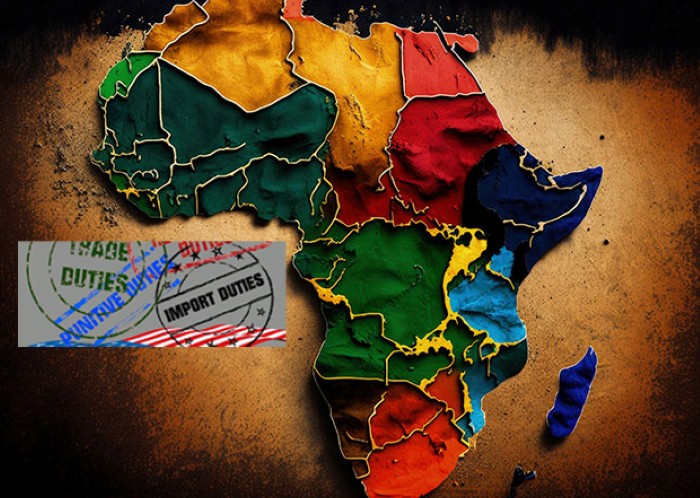
The imposition of new U.S. tariffs has severely impacted African economies, particularly fragile ones like Lesotho and key players like South Africa, by crippling exports and threatening millions of jobs. While China is stepping in with zero-tariff offers, experts warn against repeating the mistake of overdependence, as this could lead to long-term vulnerabilities and economic imbalance. The crisis highlights the urgent need for Africa to accelerate intra-continental trade through the African Continental Free Trade Area (AfCFTA) and build a self-reliant, diversified trade ecosystem.
As a new wave of US tariffs hits the global trade landscape, Africa finds itself in the eye of an economic storm. The continent is grappling with the new reality of loss of jobs, markets, and manufacturing capacity, sending the economies into a downward spiral. Most of these economies are poor and fragile and are struggling with pre-existing challenges. The US tariffs have added to their burden.
According to the US official statistics, in 2024, its total trade with Africa was approximately USD 71.6 billion. This is set to crash under the new tariff regime. Though most of the African economies face an average rate of 15% tariff, South Africa, Tunisia, Lesotho, and Libya face the steepest tariff hikes under the administration of the U.S. President. The worst hit is Lesotho, a poor, landlocked, and small economy that thrived on duty-free exports of textiles to the US. It exported jeans and garments for global giants like Levi’s, J.C. Penney, and Walmart under the African Growth and Opportunity Act (AGOA). Though the US slashed the tariff from the proposed 50% to 15%, the announcement has devastated its textile sector, the second-largest employer. The repercussions include widespread job losses, factory closures, and growing economic instability. To insulate itself from the economic shocks, Lesotho is pivoting toward South African retailers like Pick n Pay and Woolworths.
The US tariff of 30% is a big blow to South Africa, Africa’s most developed economy. The US is its second-largest trading partner, with USD 17.64 billion in bilateral trade in 2023. The tariff has derailed its automobile and agricultural sectors, particularly citrus and wine exports. It was also reported that automotive companies are considering relocation of their business due to plummeting business. Automotive exports to the U.S. have reportedly collapsed by over 80%, highlighting the magnitude of the economic shock. President Cyril Ramaphosa’s recent diplomatic efforts to woo the US back with a USD 3.3 billion investment proposal failed to make any impact. South Africa is desperately seeking alternative partners in Asia.
AGOA, established in 2000, was designed to boost African economies by granting duty-free access to the U.S. market. However, Trump’s tariff blitz effectively announces the premature closure of AGOA despite it being officially up for review in September.
To mitigate the impact of U.S. tariffs, African economies must brace themselves and implement a comprehensive set of support measures for their people. However, given their financial constraints, the sustainability of these initiatives is uncertain, particularly without external financing or new revenue streams.
As Washington retreats from Africa, China is coming forward with open arms. It is offering an economic lifeline to the continent. Already, China is Africa’s largest trading partner. It has now announced zero-tariff access to all African countries with diplomatic ties, offering itself as an alternative commercial and geopolitical partner.
However, experts caution against repeating the mistake of over-reliance on a single market. Moreover, it exposes the continent to the risk of China flooding the African markets with cheap goods, undermining the local industries. The pattern of China’s trade with Africa is the predominance of manufactured goods exports and raw material imports. This asymmetry, if continued, will perpetuate Africa’s role as a supplier of primary commodities. Critics point out that African nations must tread carefully while dealing with China. China’s deals are opaque. A short-term relief should not be swapped for long-term dependency and a debt trap.
One thing is clear. The US tariffs are ushering in a possible reorientation of Africa’s global trade partnerships. The current crisis is a wake-up call for Africa to rethink its trade model. The real solution lies neither with Washington nor with Beijing; it is within Africa. The African Continental Free Trade Area (AfCFTA), with its potential to increase intra-African trade by 81%, can be the best economic tool to build resilience and reduce overreliance on external markets. The continent has to build new engines of growth by fast-tracking AfCTA, building robust trade institutions, diversifying trade partnerships, facilitating regional corridors, and prioritizing intra-continental commerce.