

(3 Minutes Read)
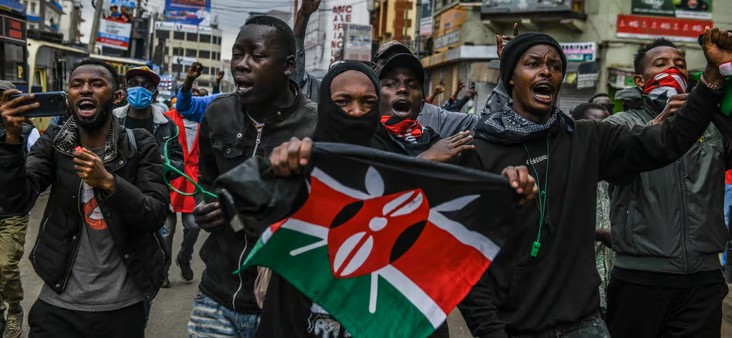
The chant rings through Kenya’s cities with a simplicity that cuts deep: “Ruto wantam” — Ruto, one term. It is not just a slogan; it is a blunt and urgent message from a restless generation. As tear gas clouds the streets, water cannons drench protestors, and gunshots echo through urban centers, a new uprising is taking shape — youthful, relentless, and disillusioned.
Three years into President William Ruto’s term, the optimism that once accompanied his “hustler” campaign — a promise to uplift the poor and tackle corruption — has turned bitter. For many young Kenyans, particularly those grappling with unemployment and the rising cost of living, the president has become the very embodiment of the system he vowed to reform.
Ruto’s image as the champion of the downtrodden has crumbled. He now presides over a government accused of brutal repression. The very police force he once promised to rein in is now implicated in deadly crackdowns that have left dozens of dead. Meanwhile, economic hardship deepens: inflation bites, jobs are scarce, and healthcare remains unaffordable. For many, hope has morphed into outrage.
This week, tragedy struck again. At least 31 people were killed in protests commemorating the country’s pro-democracy legacy — a movement ignited by the death of Albert Ojwang, a blogger and teacher who died in police custody. What began as mourning has transformed into a broader rebellion. The protesters — young, educated, tech-savvy — are demanding more than just justice for Ojwang. They want systemic change. They want a future.
These are the children of a new Kenya — raised under multiparty democracy and free primary education — but their qualifications have failed to open doors. Every year, nearly 800,000 young people enter the job market. Few find meaningful work. Instead, they encounter silence from the state, or worse, violence.
Their frustration is not just economic; it is deeply political. They speak out and are ignored. They organize and are dismissed. They protest and are met with bullets. The government has painted them as anarchists, with Interior Minister Kipchumba Murkomen even labeling the protests an attempted coup. But these youth are not revolutionaries in the traditional sense — they are citizens demanding dignity.
What sets this movement apart is its decentralization. Unlike past political revolts, it has no figurehead to co-opt, no party machinery to infiltrate. Social media has replaced traditional political structures as the organizing force. This is a leaderless uprising rooted in a shared sense of betrayal and exclusion.
President Ruto’s administration is struggling to regain control of the national narrative. Last year’s failed attempt to introduce steep tax hikes sparked mass protests and a dramatic storming of Parliament — a scene unimaginable just a few years ago. The image of young Kenyans occupying the legislative chambers was not just defiance; it was a dire warning.
Despite the turmoil, Ruto remains politically insulated — for now. His majority in Parliament shields him from any immediate threat of removal. The traditional opposition is fragmented, with veteran opposition leader Raila Odinga having been politically neutralized through behind-the-scenes deals. In this political vacuum, Gen Z’s voice is growing louder — and harder to ignore.
The critical question is whether Ruto can salvage his presidency before the 2027 elections. His administration has shown some signs of shifting gears, with new investments in social programs and youth employment. Inflation has started to ease slightly, and the economy shows early signs of stabilization. But for many young Kenyans, these measures are too little, too late — especially as the repression continues and lives are still being lost in the streets.
What Ruto needs now is not more technical advice or economic jargon. He needs to listen. Truly listen. The perception among Kenya’s youth is that this government sees them as threats rather than citizens. That their cries for justice are answered not with empathy, but with tear gas. That the state’s default response is not dialogue, but suppression.That perception is dangerous. If left unchallenged, it could seal Ruto’s fate. Political credibility, once lost, is hard to regain.
Read Also;
https://trendsnafrica.com/protests-cost-kenyan-businesses-dearly/
President Ruto has two years to change course. Two years to prove that his “bottom-up” economic model was more than just a campaign slogan. Two years to convince the youth that their voices matter, that their pain is acknowledged, and that justice is not just for the connected few.
If he fails, the chants may become prophecies: “Wantam.” One term. A presidency remembered not for change, but for betrayal. A brief chapter in Kenya’s history, marked by lost promise and a generation that refused to be silenced.