

(3 Minutes Read)
Walvis Bay continued to dominate Namibia’s trade landscape in October, handling exports valued at N$7.3 billion, reaffirming its status as the country’s premier gateway for international commerce. According to the latest figures released by the Namibia Statistics Agency (NSA), the coastal port far outperformed other entry and exit points. Eros Airport followed distantly with N$2.9 billion in export activity, while the Katima Mulilo border post managed N$1.1 billion in outward-bound goods.
On the import front, Walvis Bay again took the lead, processing N$5.5 billion worth of goods. Ariamsvlei ranked second with N$3.3 billion, followed by the Trans Kalahari border post, which handled N$2.6 billion.
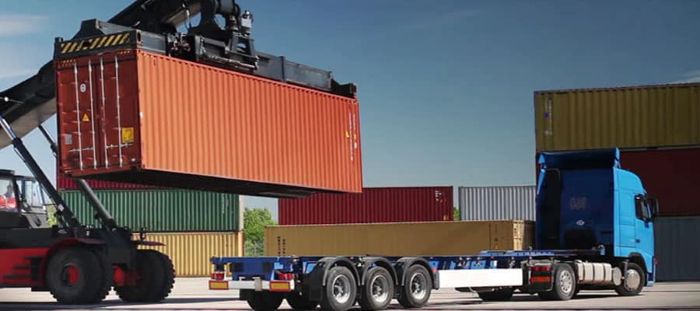
Maritime shipping was the primary channel for Namibia’s exports. In October 2025, goods transported by sea totalled N$7.4 billion, representing 56% of the nation’s overall export value. Major export commodities included uranium, copper ores and concentrates, and fish.
Air transport accounted for 25.1%, boosted mainly by high-value items such as non-monetary gold and diamonds, while road transport made up 18.9%, carrying products like fish, petroleum oils, and fertilisers.
In total, Namibia exported 386 215 tonnes of goods in October—an 81.5% increase from September and 7.8% higher than the same month last year. Sea transport moved 207 563 tonnes, road transport 178 417 tonnes, and air cargo only 94 tonnes, maintaining its minimal contribution in volume despite its high-value cargo.
Imports were primarily moved by road, which carried goods valued at N$9.1 billion—the highest road-based import figure recorded since January 2025. Key imports included nickel ores and concentrates, alcoholic beverages, and commercial vehicles.
Sea transport comprised 35.2% of import value, mainly shipping petroleum oils, fertilisers, and railway construction materials. Air imports—totalling 8%—were driven by diamonds, medicaments, and telecommunication equipment.
Overall import volumes reached 587 922 tonnes, an increase of 22.6% from September and 11.3% from October 2024. Sea imports made up 335 173 tonnes, road imports 252 487 tonnes, and air imports just 182 tonnes.
These trade flows unfolded as Namibia continues to participate in the African Continental Free Trade Area (AfCFTA), which aims to eliminate barriers and stimulate trade across the continent. In October, Namibia exported N$5.6 billion worth of goods to African markets while importing N$7.6 billion, resulting in a trade deficit of N$2 billion. Total trade with African countries amounted to N$13.2 billion.
Read Also;
Intra-African exports represented 42.4% of Namibia’s total exports, whereas imports from African nations accounted for 47.2% of all imports—indicating that the majority of Namibia’s trade still occurs with countries outside the AfCFTA framework. Namibia’s leading African export destinations were South Africa, Botswana, Zambia, the Democratic Republic of Congo, and Zimbabwe. On the import side, top contributors included South Africa, Zambia, Morocco, the Democratic Republic of Congo, and Eswatini.