


(3 Minutes Read)
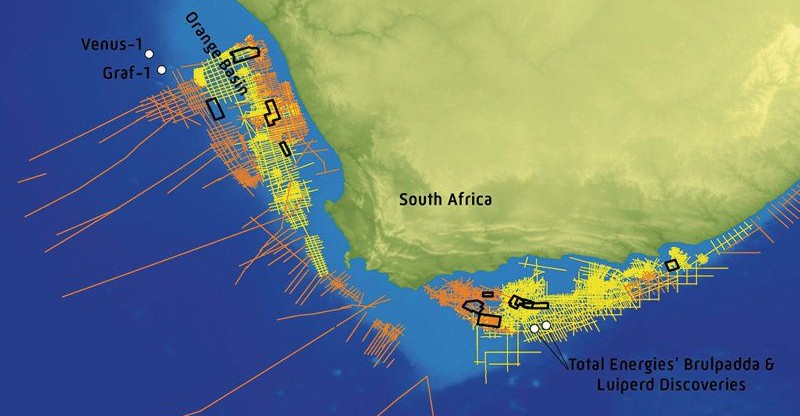
Namibia’s ambitious offshore oil project—anchored in the Venus field within the ultra-deep waters of the Orange Basin—could mark a turning point in the nation’s economic trajectory, according to a newly released draft Environmental and Social Impact Assessment (ESIA).
Led by TotalEnergies EP Namibia B.V., in partnership with Impact Oil and Gas, NAMCOR (Namibia’s state-owned petroleum corporation), and Qatar Energy, the project is projected to contribute as much as 18% of Namibia’s GDP during peak production. It represents one of Southern Africa’s largest public-private oil ventures, expected to spur wide-ranging economic and social benefits.
The draft ESIA estimates that over the next 25 years, Namibia could generate N$536 billion to N$800 billion (USD 25–46 billion) in economic value, while national fiscal revenues may reach N$127 billion to N$229 billion. Crude exports are forecasted to yield between N$593 billion and N$888 billion in earnings.
Situated roughly 300 kilometres off Namibia’s southern coast in waters reaching 3,000 metres deep, the Venus field is set to become a cornerstone of the country’s nascent petroleum industry. The development plan envisions up to 40 subsea wells, a 21-year operational period, and potential extension for a further decade. Production will be conducted through a Floating Production Storage and Offloading (FPSO) vessel, from which oil will be transferred to shuttle tankers and transported via Walvis Bay for international export.
Employment generation forms a key component of the initiative, with an estimated 5,000 jobs expected during the drilling and installation phase and as many as 7,000 positions during production. The report highlights the importance of investing in skills development and local content policies to ensure Namibians benefit directly from this emerging sector.
Yet, the project also sits at the intersection of pressing debates about environmental responsibility, energy equity, and Africa’s role in the global energy transition. As a country without prior commercial oil production, Namibia faces the delicate challenge of balancing economic opportunity with environmental and social stewardship.
The active participation of NAMCOR underscores a shift toward greater national ownership and resource governance, positioning Namibia as an assertive player rather than a passive participant in extractive ventures. However, experts caution that genuine transformation will depend on transparent governance, environmental safeguards, and a long-term development vision that extends beyond fiscal returns.
Read Also;
https://trendsnafrica.com/totalenergies-allocates-usd-300-mn-for-namibian-oil-exploration-in-2024/
While the draft ESIA outlines proposed mitigation measures, stakeholders are expected to call for deeper accountability and consultation to ensure the project aligns with Namibia’s climate commitments under the Paris Agreement. Ultimately, Namibia’s offshore oil pursuit is not solely an economic story—it is a broader conversation about sovereignty, sustainability, and reimagining prosperity on African terms.