

( 4 Minutes Read)
As South Africa steadily transitions from coal to renewable energy, Exxaro’s latest corporate maneuver highlights the broader transformation of one of Africa’s leading mining conglomerates into a model of sustainability, inclusivity, and global competitiveness.
Meanwhile, another cornerstone of Africa’s international engagement—the long-standing security alliance between the United States and Nigeria—is facing one of its most serious challenges in decades.
For over twenty years, the U.S.–Nigeria defense partnership has stood as one of the most strategic and well-funded security collaborations on the continent, valued at more than USD 1.58 billion since Nigeria’s return to democracy in 1999. According to the U.S. Bureau of Political-Military Affairs, this alliance encompasses a wide spectrum of cooperation, including military training, arms sales, counterterrorism assistance, and humanitarian demining initiatives.
The alliance’s stability was shaken after former President Donald Trump announced that the U.S. had designated Nigeria a “Country of Particular Concern”—a move that could trigger a suspension or reduction of military aid. In a statement posted on Truth Social, Trump accused the Nigerian government of ignoring what he described as “genocidal violence” in the Middle Belt and northern regions, particularly against Christian communities.
The declaration follows years of growing unease in Washington over Nigeria’s human rights record, allegations of excessive use of force by its military, and continued insecurity caused by extremist and criminal groups. Trump argued that the Nigerian government had “failed to protect vulnerable populations” and permitted “systematic persecution of Christians.”
U.S. lawmakers, including Riley Moore, have indicated that Trump will be briefed on various policy options to address what they characterize as a “Christian genocide” in Nigeria. Should Washington proceed with aid restrictions, this would mark a major policy reversal and place significant strain on a defense partnership that has been central to counterterrorism efforts in West Africa.
U.S. assistance has historically focused on improving Nigeria’s defense professionalism and operational capacity. American programs have provided officer training at U.S. military academies, developed local defense curricula, and enhanced Nigeria’s maritime and counterterrorism capabilities.
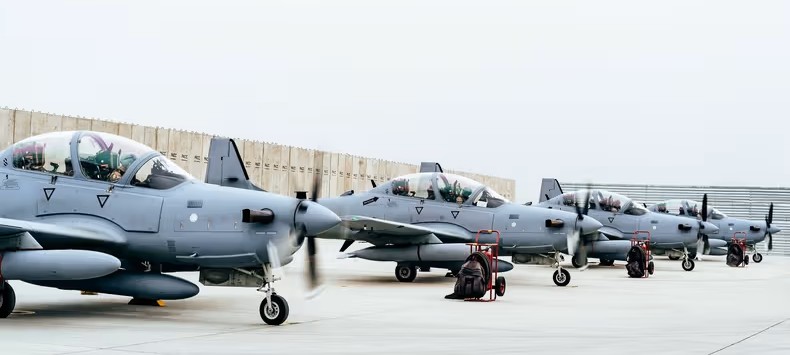
Notable initiatives include the sale of 12 A-29 Super Tucano aircraft, 12 attack helicopters, and $25 million allocated for civilian harm mitigation. The U.S. has also donated 24 MRAP vehicles, two Hamilton-class Coast Guard cutters, and funded demining projects and explosive ordnance disposal training. These measures were intended to create a more capable, accountable, and effective Nigerian military force.
Despite these investments, Nigeria continues to face severe security challenges. Boko Haram and ISIS-West Africa remain active in the northeast, while widespread banditry, kidnapping, and intercommunal violence persist across other regions. Analysts attribute these crises to underfunding, institutional corruption, and a lack of coordination among Nigeria’s security agencies.
Washington has repeatedly expressed frustration over civilian casualties linked to Nigerian military operations and the slow pace of defense reforms. The Trump administration’s latest designation underscores this dissatisfaction and raises questions about the future of the bilateral partnership.
In response, Nigeria’s Ministry of Foreign Affairs labeled the U.S. decision as “unfortunate and misleading,” affirming that the government remains committed to protecting all citizens regardless of religion. Nigerian officials maintain that the U.S. assessment fails to account for progress in counterterrorism and peacebuilding initiatives, and they have urged diplomatic engagement rather than punitive measures.
If U.S. aid is suspended, it could halt ongoing training missions and weapons deliveries, jeopardizing operations worth hundreds of millions of dollars. Such a vacuum might invite Russia or China to expand their military and strategic influence in Nigeria, potentially altering regional power dynamics.
Read Also;
As both nations reassess their priorities, the USD 1.58 billion U.S.–Nigeria security alliance stands at a critical juncture. It reflects not only the intersection of counterterrorism and human rights but also the broader reshaping of global alliances in an era of rising geopolitical competition. The coming months will determine whether Washington and Abuja can repair their strained relationship—or whether Nigeria’s security partnerships will take a new and uncertain direction.