

(3 Minutes Read)
Protests have intensified across major Tanzanian cities following Wednesday’s presidential and parliamentary elections, which opposition supporters are condemning as fraudulent. Demonstrations flared after the electoral commission began releasing results showing President Samia Suluhu Hassan winning by overwhelming margins, further fueling public anger.
In the south-western Mbea province, Samia reportedly secured nearly 95% of the vote, and she has taken a commanding lead across most other constituencies on both the mainland and Zanzibar. Opposition figures and international observers have questioned the legitimacy of these results, arguing that the vote was heavily skewed in favour of the ruling party, which has never lost an election since independence.
The opposition’s frustration has been compounded by the jailing of main opposition leader Tundu Lissu on treason charges and the disqualification of Luhaga Mpina, another major challenger, on legal grounds. With key rivals sidelined, Samia’s re-election appeared virtually guaranteed, drawing sharp criticism from European Union lawmakers who labeled the election a “months-long fraud.”
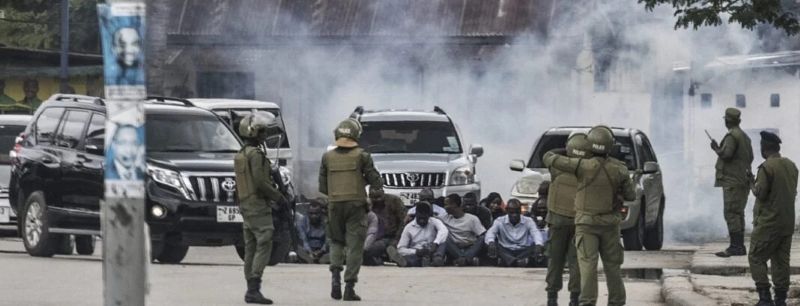
Following the announcement of early results, demonstrations erupted nationwide. Hundreds of protesters reportedly crossed into Kenya, blocking roads, lighting bonfires, and tearing down posters of President Samia. Clashes with Tanzanian police led to several deaths and injuries, with gunfire and tear gas reported in Mwanza, Dodoma, and Dar es Salaam — the latter now under tight security and a night-time curfew.
The unrest has disrupted major transport routes, including the road to Dar es Salaam’s international airport. Kenya has issued warnings to its citizens near the border, while Amnesty International has expressed concern over reports of civilian and police casualties, describing the violence as “deeply disturbing.”
As tensions rise, the Tanzanian government has ordered civil servants to work from home and imposed restrictions on internet access, drawing criticism from rights groups that say information blackouts only heighten instability. Protesters are reportedly turning to alternative communication platforms such as the walkie-talkie app Zello to coordinate further action.
Read Also;
President Samia, who first assumed office in 2021 following the death of John Magufuli, was once praised for loosening political controls. However, her second-term bid has revived accusations of democratic backsliding, political repression, and manipulation of electoral institutions.
With Samia’s near-landslide results dominating the early tallies, what was meant to be a reaffirmation of stability has instead plunged Tanzania into one of its most volatile political crises in recent years.