


(3 Minutes Read)
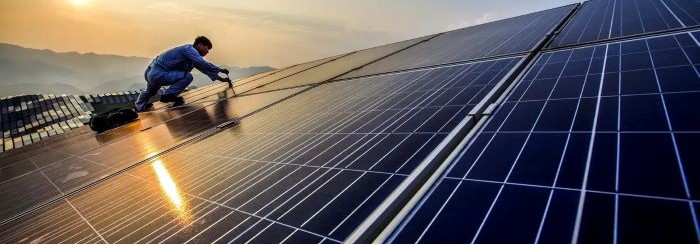
African nations are increasingly turning to solar energy, with imports of Chinese solar panels soaring by 60% in the 12 months leading up to June, according to data from the climate think tank Ember. This rapid acceleration highlights a continent-wide shift toward renewable energy solutions, with a growing number of countries seeking to meet their energy needs sustainably.
China, which manufactured 80% of the world’s solar panels in 2024, remains the global leader in production and export. Its dominance in the market is a key driver behind this trend, with 25 African countries importing at least 100 megawatts (MW) of solar capacity each—up from just 15 nations in the previous year.
South Africa retained its position as the largest African importer of Chinese solar technology, although its demand has recently tapered off. This slowdown follows a period of severe power outages in 2023, during which solar imports surged to counter supply gaps. As state-owned utility Eskom Holdings SOC Ltd. has since stabilized the electricity grid, the urgency has declined.
Nevertheless, solar adoption is booming elsewhere across the continent. Over the past two years, countries beyond South Africa have tripled their imports. Nigeria, for instance, overtook Egypt to become the second-largest market for Chinese solar panels, bringing in 1,721 MW in the past year. Algeria followed as the third-largest importer.
The broader trend shows a total shipment of 15 gigawatts (GW) of solar capacity to Africa, up significantly from 9.4 GW a year earlier, based on Chinese customs data cited by Ember. Notably, 20 African countries recorded their highest-ever levels of solar imports in the last year alone.
In Sierra Leone, the impact of solar expansion could be particularly transformative. The country imported enough panels over the past 12 months to generate electricity equivalent to 61% of its entire reported national output in 2023—assuming full installation and operation.
More broadly, the influx of solar panels could increase total electricity generation by over 5% in 16 African nations, offering a major boost to energy access across the continent.
The Ember report also highlights a significant economic advantage. Switching from diesel to solar can result in rapid cost recovery. In Nigeria, for example, the savings from reduced diesel consumption can pay off the initial cost of a solar panel in just six months—or even sooner in other African countries.
Read Also:
https://trendsnafrica.com/chinese-entities-to-build-100-mw-solar-energy-plant-in-namibia/
However, the contrast in import values between traditional fuel and solar technology remains stark. In nine of the top ten solar-importing countries, the value of imported refined petroleum still exceeds that of solar panels by a margin of 30 to 107 times. This underscores both the continued reliance on fossil fuels and the potential for solar to play a much larger role in the region’s future energy landscape.