

(2 Minutes Read)
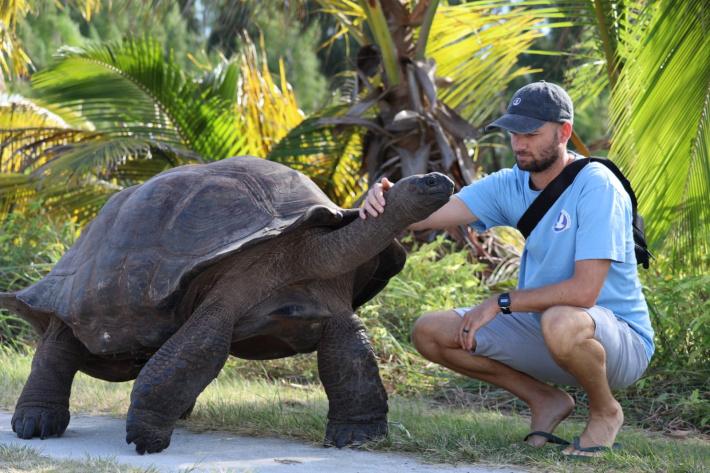
Seychelles has celebrated a significant conservation achievement with the release of fifty Aldabra giant tortoises on North Island. This initiative represents a pivotal step in safeguarding the nation’s unique biodiversity and restoring the natural heritage of its islands.
The project was spearheaded by the Indian Ocean Tortoise Alliance (IOTA) in collaboration with the North Island Environment Department, with critical support from the Ministry of Environment, Climate, Energy and Natural Resources (MECENR). The introduction of these tortoises not only helps preserve one of the world’s largest and most iconic reptile species but also contributes to the ecological restoration of North Island, enhancing habitat regeneration and promoting a balanced ecosystem.
Aldabra giant tortoises, renowned for their longevity and vital role in seed dispersal and vegetation management, have long been symbols of Seychelles’ natural heritage. Their reintroduction to North Island marks a new chapter in the country’s commitment to biodiversity protection, demonstrating a model for conservation and sustainable management of fragile island ecosystems.
Read Also;
The Aldabra Giant Tortoise, ‘Torti-d-Ter’ in Creole, is one of the two remaining species of giant tortoise in the world. They grow to over 300kg and can live close to 200 years. The Seychelles and its 115 islands evolved with these animals, their environments being shaped by the reptile’s movements. Like elephants on the African savannah, they are what is known as a Keystone Species. By dispersing seeds, disturbing soil, trampling over small tree saplings and grazing, they can keep areas open, allowing smaller species of scrub and grasses to thrive, engineering a mosaic of habitats that other indigenous animal species depend on.