


(3 Minutes Read)
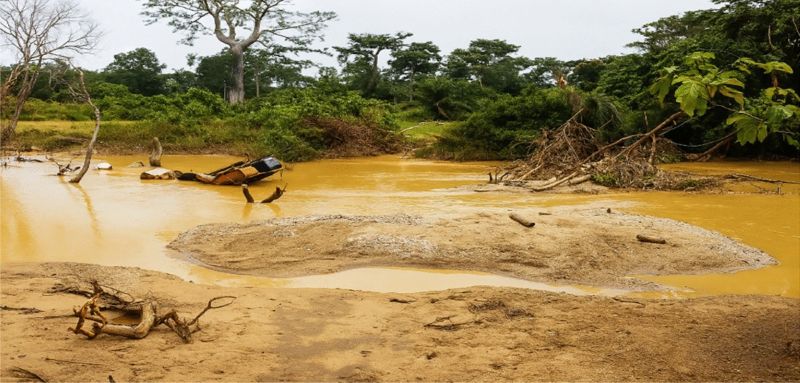
Across Zimbabwe, scenes of excavators and dump trucks gouging deep, terraced cuts into hillsides, mountains, and waterways have become unsettlingly familiar. For many communities, these scars left by large-scale industrial mining serve as constant reminders of the severe environmental damage taking place.
Public frustration has surged in recent years, fueled by allegations that Chinese-owned mining companies — which dominate roughly 90% of Zimbabwe’s mining sector — are committing serious abuses. Reports have accused some operators of crimes ranging from murder, rape, and forced displacement to large-scale pollution and habitat destruction, often with little legal consequence.
The alarm grew louder on October 21 when journalist and human rights advocate Tendai Mbofana posted a video exposing a Chinese mining operation near his home in Redcliff. The footage, widely circulated in Zimbabwean media, showed heavy machinery digging perilously close to the Cactus Port Dam. Mbofana warned that such activities threaten the fragile ecosystem along the Kwekwe River.
According to the Centre for Natural Resource Governance (CNRG), Chinese-linked companies extracted minerals worth billions of dollars in recent years — including USD 2.79 billion in 2023 alone. The organization’s research has repeatedly found that many foreign operations, particularly those backed by Chinese capital, frequently operate in ecologically sensitive areas, evade regulatory oversight, lack transparency, and bribe officials.
In Redcliff, Mbofana warns that mining activities are tearing apart landscapes and contaminating water sources essential for both commercial and subsistence farmers downstream. “Cactus Port Dam is vital for this community,” he said. “If mining continues this way, we’ll be left with ruined land and disfigured mountains.”
His video triggered widespread condemnation from citizens, civil society groups, and environmental activists who argue that Chinese companies are exploiting Zimbabwe’s natural resources with minimal accountability. Social commentator Rodreck Kudakwashe called the situation “daylight environmental terrorism,” accusing Chinese investors of stripping the country’s resources under the false banner of economic development.
In a follow-up report, Mbofana described a powerful nighttime blast that shook homes and filled Redcliff with dust — a disturbance residents say is now commonplace. He warned that unchecked mining will lead to contamination, siltation, and the collapse of livelihoods for countless farmers, jeopardizing food security for downstream communities. Once the dam and river are polluted, he cautioned, recovery could take generations — if it happens at all.
Read Also;
The controversy in Redcliff echoes broader concerns across the country. Journalist Marcus Mushonga, citing lithium extraction in the Bikita region, warned that China’s resource-for-infrastructure approach has raised profound questions about exploitation, sovereignty, and sustainability. He noted that throughout Africa, Chinese mining projects have been linked to environmental damage, labor abuses, and disregard for local communities.