

(3 Minutes Read)
Despite Africa’s vast solar potential, the continent’s 1.4 billion people have access to just 21.5 gigawatts of installed solar capacity—dwarfed by China’s 198 GW in five months alone. With 78% of DRC’s population lacking electricity, initiatives like Mission 300 and the Desert to Power project are racing to bridge this gap, targeting 250 million people across 11 Sahel nations by 2030. Yet scattered populations, infrastructure bottlenecks, and regulatory hurdles continue to slow progress, prompting analysts to call for regional cluster projects and household-level incentives to accelerate Africa’s clean energy transition.
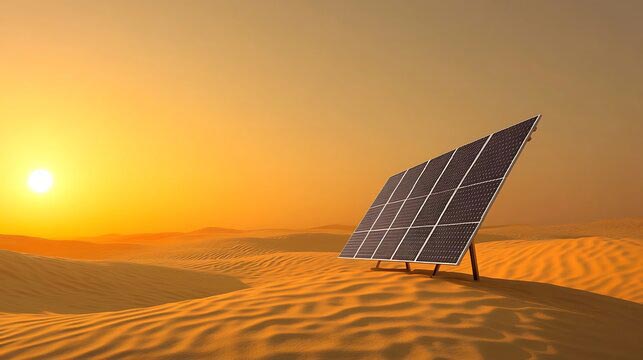
A large number of countries in Africa does not have access to electricity. For instance, around 78% of the population in DRC has no access to electricity, according to a World Bank Study. Solar has the potential to provide clean energy to those who have been denied power due to poor infrastructure.
Despite this huge potential to wipe off the electricity deficit in the continent, coverage to too little. For the continent having 1.4 billion people, it has only just 21.5 gigawatts of installed solar capacity in 2024, as estimated by the International Agency. It is too small compared to China’s 198 GW between January and May this year.
There are some inherent problems to Africa. Foremost is the scattered, low density population centers. National grids often struggle to expand beyond cities due to high infrastructure costs and bottlenecks, regulatory hurdles, unclear government policies, and sometimes, conflict and unrest. When it comes to solar, these issues are compounded with the high upfront costs of large-scale farms.
Multinational projects aim to address these challenges, such as the “Mission 300” initiative, which has seen 29 nations pledge policy changes in a bid to improve energy access in the region and connected 30 million people so far.
Yet another project is AfDB’s Desert to Power Initiative launched in 2018. It aims to bring 10 gigawatts of solar power to 11 countries in the Sahel region — Burkina Faso, Chad, Djibouti, Eritrea, Ethiopia, Mali, Mauritania, Niger, Nigeria, Senegal, and Sudan — by 2030. The project will benefit 250 million people.
Analysts feel similar projects aimed at cluster of countries enjoying geographical contiguity should be launched to supplement the conventional power with clean energy, derived form hydroelectric and solar. Individual households should be encouraged to switch over to non-conventional energy by giving incentives for installation and allowing them to feed excess energy to the grid by offering attractive terms.