


(3Minutes Read)
US AID was a major source for funding training programs for women in oyster harvesting, collection and processing besides creating an ecosystem that enables growing oysters.
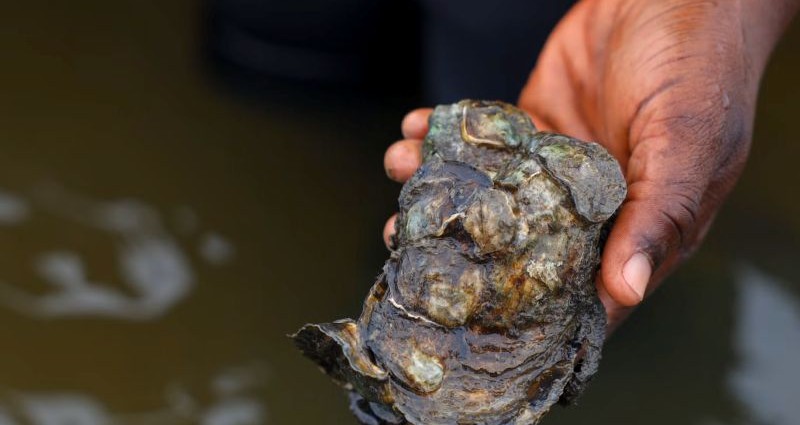
In Ghana’s coastal mangroves, oyster farming has been a key source of livelihood dominated for ages by women. Hundreds of women were trained in eco-friendly farming methods for oysters, including mangrove planting and preservation, and selective oyster harvesting, to lessen the impact of climate change.
US AID was a major source for funding training programs for women in oyster harvesting, collection and processing besides creating an ecosystem that enables growing oysters.
Mangroves, trees or shrubs that grow along coastlines serve a critical multifunctional purpose in the aquatic ecosystem, ranging from being a home to fish to providing a buffer for coastal erosion from rising sea levels, and protection to land during storms and cyclones.
However, training by the non-profit Development Action Association ended after it lost its U.S. aid as a result of U.S. President Donald Trump’s decision to cut foreign aid contracts.
It left the women to try what they can to keep their generational practice and sustain their families as Ghana emerges from its worst economic crisis in a decade. Oyster farming involves breeding oysters in a controlled aquatic environment for commercial purposes. Ghana has lost a significant portion of its mangroves to climate change and development.
Read Also:
https://trendsnafrica.com/seychelles-to-grow-oysters-for-edible-purpose-on-a-pilot-basis/
There is no available data on recent depletion, but over 80% of the original mangroves have been lost since the last century. Mangroves are also increasingly threatened by climate change as global temperatures and sea levels rise.