

(3 Minutes Read)
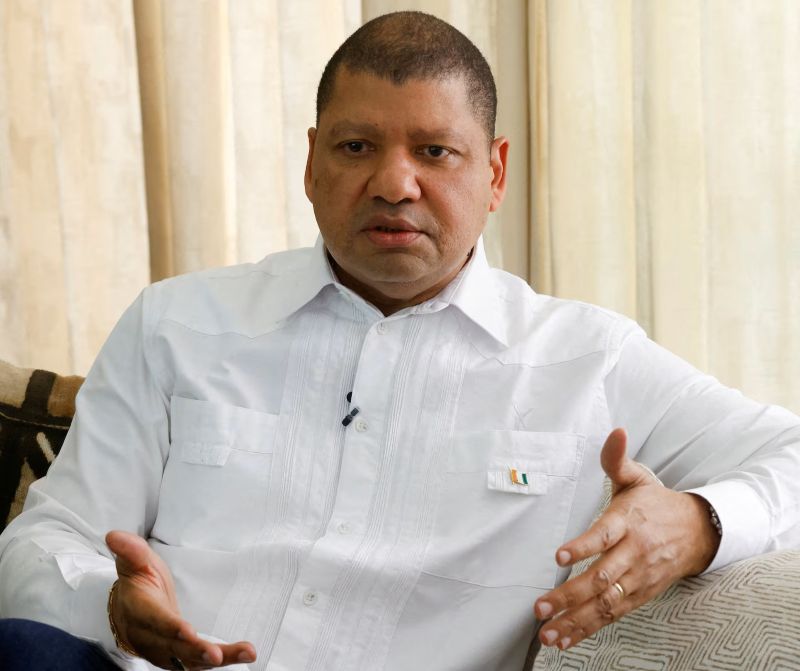
Former Ivory Coast commerce minister Jean-Louis Billon has formally conceded defeat to the incumbent president, Alassane Ouattara, following the release of early partial election results indicating a decisive lead for the veteran leader.
In an official statement on Sunday, Billon acknowledged Ouattara’s commanding position in the vote count, stating: “The initial results place the incumbent President, Alassane Ouattara, in the lead, designating him the winner of this presidential election.” Billon also extended his congratulations to the president, who is seeking a fourth consecutive term in office.
Billon was one of four opposition candidates contesting the election against Ouattara, the 83-year-old former International Monetary Fund (IMF) executive. However, his campaign suffered a major setback after he failed to obtain the endorsement of the Democratic Party of Côte d’Ivoire (PDCI), led by former Credit Suisse CEO Tidjane Thiam, who was barred from running due to issues surrounding his French citizenship.
Earlier on Sunday, the Independent Electoral Commission (CEI) began releasing partial results from Saturday’s nationwide vote, broadcasting the tallies live on state television. According to the results from 20 administrative divisions had been announced, with around 10 or 11 remaining, including votes from the Ivorian diaspora in six countries. Approximately nine million Ivorians were eligible to cast their ballots in a contest shaped by a fractured opposition and the exclusion of key rivals, including former President Laurent Gbagbo—barred due to a criminal conviction—and Thiam. Their disqualification led to pre-election unrest and calls for a boycott from sections of the opposition.
Despite earlier tensions, Abidjan—the nation’s economic hub—remained largely calm and quiet following the vote, with only isolated incidents of violence reported elsewhere that resulted in two fatalities. Authorities had deployed 44,000 security personnel to maintain order before, during, and after the polls.
Preliminary reports from the election commission suggested a voter turnout of around 50 percent. Observers noted stark regional contrasts: polling stations in southern and western opposition strongholds were sparsely attended, while northern regions, where Ouattara commands strong loyalty, saw heavy voter participation.
Read Also;
https://trendsnafrica.com/counting-of-presidential-polls-start-in-ivory-coast/
With major opposition figures sidelined, Ouattara was widely expected to win comfortably. The election echoed the 2020 presidential race, when he secured 94 percent of the vote amid a similar 50 percent turnout and an opposition boycott. In this election, none of Ouattara’s challengers represented major political movements or possessed the nationwide influence of the Rally of Houphouëtists for Democracy and Peace (RHDP), the ruling party that has dominated Ivorian politics for over a decade.