

(3 Minutes Read)
Since proclaiming independence from Somalia in 1991, Somaliland, a self-governed territory in the Horn of Africa has continued its long-standing campaign for international recognition. Despite its internal political stability, functioning democracy, and regular elections, no country has officially recognized Somaliland as a sovereign state. Now, in a renewed diplomatic push, Somaliland is actively lobbying the United States, proposing significant strategic and economic incentives in exchange for American support.
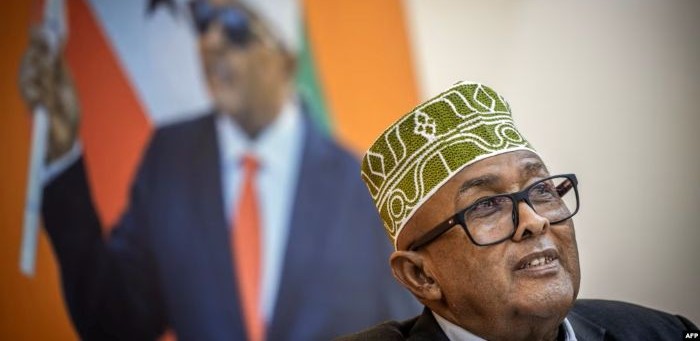
President Abdirahman Mohamed Abdullahi, who assumed office in 2024, is leading efforts to persuade Washington to back Somaliland’s bid for statehood. Central to his pitch is the offer of a strategically located military base near the Red Sea’s entrance—an area of growing geopolitical interest—as well as access to critical minerals, including gold, iron ore, gemstones, tin, and industrial minerals like gypsum and marble. These resources are considered vital for advanced technologies and infrastructure development, which the U.S. increasingly seeks to secure from trusted partners.
President Abdullahi has reportedly initiated talks with officials from the U.S. Embassy in Somalia and the Department of Defense, focusing on areas such as counter-terrorism, economic cooperation, and regional security. U.S. military leaders, including high-ranking officers responsible for the Horn of Africa, have visited Somaliland’s capital, Hargeisa, indicating growing strategic interest.
Somaliland, officially referred to as the Republic of Somaliland, lies along the southern coast of the Gulf of Aden, bordered by Djibouti, Ethiopia, and Somalia. Covering an area of 176,120 square kilometers (approximately 68,000 square miles), the region has a population of about 6.2 million as of 2024. Despite functioning independently with its own central government, currency, and institutions, it remains unrecognized by the international community, which still regards it as part of Somalia.
While Somaliland maintains informal diplomatic relations with some foreign governments and hosts representative offices from nations like Ethiopia and Taiwan, it has yet to secure official recognition from any United Nations member state. It is, however, a member of the Unrepresented Nations and Peoples Organization (UNPO)—a group advocating for the rights of unrecognized and marginalized communities.
Read Also:
https://trendsnafrica.com/opposition-leader-wins-somaliland-presidential-election/
In recent years, the situation has become more complex. Following the Las Anod conflict in 2022, Somaliland lost significant control over parts of its eastern territories to pro-unionist forces, who subsequently formed the SSC-Khatumo administration, a group that supports unity with Somalia.
Despite these challenges, Somaliland’s leadership believes that recognition by a major power such as the United States could be a transformative step, both for its international standing and for regional stability in the Horn of Africa. In presenting itself as a reliable and strategically vital partner, Somaliland hopes to shift the long-standing diplomatic calculus in its favor.