

(3 Minutes Read)
Ghana’s inflation continues to trend downward in a historic disinflation streak, with the national rate falling to 6.3% in November 2025, down from 8.0% in October, according to the latest Consumer Price Index (CPI) released by the Ghana Statistical Service (GSS). This marks the eleventh consecutive month of declining inflation—one of the longest in recent years—and brings the country significantly closer to the Bank of Ghana’s medium-term target range of 6% ± 2%.
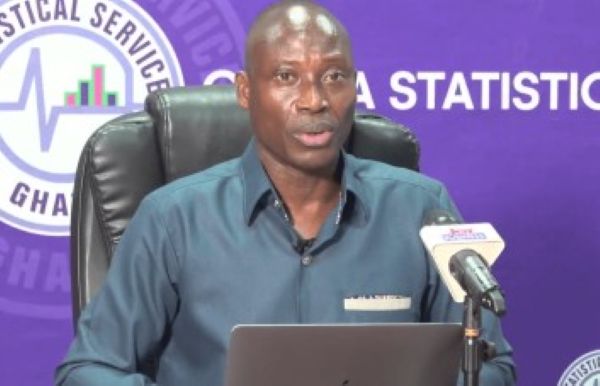
During a presentation in Accra, the Government Statistician, Dr. Alhassan Iddrisu, noted that the persistent fall in inflation is largely driven by broad-based reductions in both food and non-food prices. He added that month-on-month inflation rose only marginally by 0.9%, pointing to a relatively stable price environment as the year draws to a close.
Food inflation recorded one of its most significant drops, decreasing from 9.5% in October to 6.6% in November. Dr. Iddrisu attributed this improvement to favorable harvest outcomes, enhanced food supply across markets, and steadier transport and input costs.
Non-food inflation also trended downward—falling from 6.9% to 6.1%—reflecting reduced cost pressures in key expenditure areas such as housing, utilities, transport services, and household goods.
The services sector experienced similar relief, with inflation easing from 4.6% to 3.8%, aided by moderating costs associated with education, household maintenance, and administrative services.
Regional Inflation Patterns Show Wide Variations
A regional assessment of the CPI highlighted notable disparities.
- The North East Region recorded the highest inflation at 12.3%, driven mainly by transportation-related expenses and fluctuations in food prices.
- Conversely, the Savannah Region reported the lowest inflation at -0.02%, signalling steady market conditions and stronger food supply in the region.
Inflation for locally manufactured goods dropped from 8.0% in October to 6.8% in November, while imported goods inflation slowed to 7.3%, down from 9.3%. Economists attribute these declines to a more stable exchange rate, improved import flows, and gradually easing supply chain constraints.
Economists describe the latest CPI data as a strong signal of ongoing economic stabilization, suggesting improved household purchasing power, reduced business uncertainty, and potential for further reductions in lending rates. The Bank of Ghana’s recent policy rate cuts, supported by improved liquidity conditions, are expected to help maintain the disinflation momentum.
Read Also;
https://trendsnafrica.com/ghanas-annual-inflation-falls-consecutively-for-18-months/
Businesses are being urged to take advantage of the favourable inflation environment by scaling up production, enhancing efficiency, and reinforcing domestic supply networks. Analysts also encourage producers and retailers to pass on cost savings to consumers to sustain broad economic stability.
With just one month left in the year, the GSS report fuels optimism that Ghana may end 2025 with inflation solidly within its target band—a milestone achievement in the nation’s ongoing post-restructuring economic resurgence.