


(3 Minutes Read)
In Zimbabwe, a quiet revolution is unfolding as smallholder farmers increasingly embrace indigenous seeds to strengthen food security and climate resilience. Traditional crops like pearl millet, finger millet, bambara groundnuts, and cowpeas—long cultivated by rural communities—are regaining ground due to their cultural roots and natural adaptability to the country’s challenging climate.
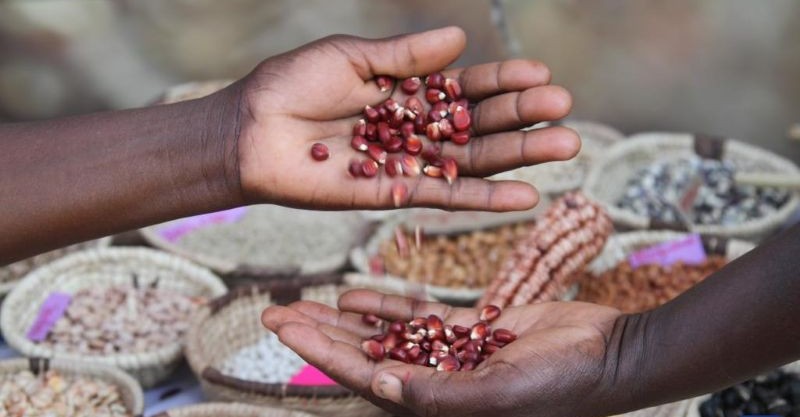
This shift was evident at the National Good Seed and Food Festival in Harare, where farmers from across Zimbabwe gathered to celebrate and exchange local seed varieties. The event marked more than just an agricultural fair—it reflected a broader movement to reclaim food systems that are ecologically sound and community-driven.
Indigenous crops are valued not only for their nutritional richness but also for their resilience. Unlike hybrid maize, which struggles without irrigation and chemical inputs, traditional grains thrive under drought conditions and poor soils. They also contribute to dietary diversity, offering essential nutrients often missing from maize-heavy diets. Crops like sorghum and millet support better glycaemic control, while legumes such as bambara groundnuts provide plant-based proteins. Indigenous vegetables like amaranth and pumpkin leaves help address micronutrient deficiencies.
Seed saving and exchange—core to Zimbabwe’s agrarian culture—play a key role in this revival. When farmers share seeds, they build social safety nets and maintain biodiversity. These informal seed systems function as grassroots gene banks, preserving varieties often ignored by formal agricultural research, which tends to prioritize hybrids and export crops.
Beyond their practical value, seeds hold deep cultural and spiritual meaning. Planting rituals connect families to their ancestors and affirm cultural identity. For many, controlling one’s seed is an act of autonomy and self-determination. As farmer Linda Hungwe puts it, “Seed symbolises the beginning of life… when I control the seed I grow, I take charge of my destiny.”
However, challenges remain. National policies still favor hybrid maize and chemical farming, limiting market access and support for traditional crops. Infrastructure and credit systems are largely geared toward commercial agriculture, leaving indigenous grain farmers on the margins.
Yet Zimbabwe’s experience mirrors a broader African trend. From South Africa to Malawi, countries are reviving indigenous farming practices to reduce external dependence and build resilience amid climate change. These efforts challenge the dominance of industrial agriculture by proposing plural, locally grounded models that combine indigenous knowledge with modern science.
Read Also;
This growing movement underscores that the future of African agriculture need not be either traditional or modern—it can be both. By centering biodiversity, local knowledge, and community control, Zimbabwean farmers are shaping a more resilient and culturally rooted food system—one that may offer valuable lessons across the continent.