

(3 Minutes Read)
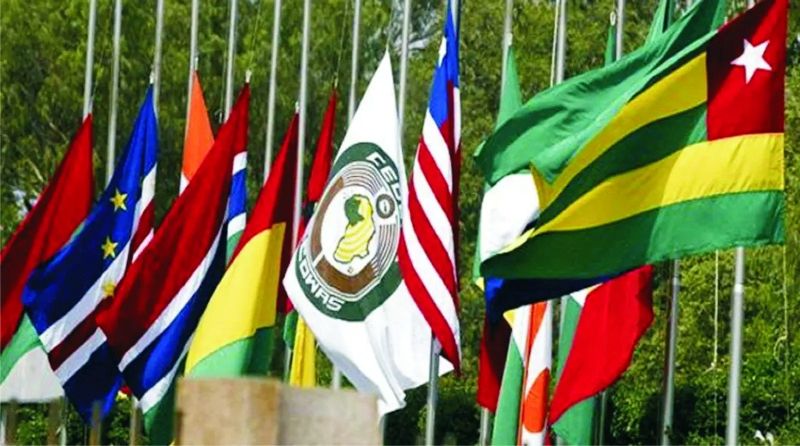
The Economic Community of West African States (ECOWAS) has voiced strong support for Nigeria following controversial remarks by former U.S. President Donald Trump, who alleged via social media that large-scale, religiously driven killings — amounting to genocide — were taking place in the country. In a statement released from Abuja , the ECOWAS Commission firmly rejected Trump’s assertions, describing them as “inaccurate and dangerously misleading,” particularly amid Nigeria’s complex and evolving security landscape.
ECOWAS emphasised that terrorist violence in West Africa — including Nigeria — cannot be simplistically reduced to religious or ethnic persecution. The bloc highlighted that extremist attacks across the region have indiscriminately targeted Muslims, Christians, traditional worshippers, and non-religious individuals alike. “Portraying one community as uniquely victimised distorts the complex and painful reality of terrorism in the region,” the statement noted, warning that such narratives threaten the fragile social cohesion that sustains many communities.
Trump’s comments, made on the Truth Social platform, accused “radical Islamists” of orchestrating mass killings of Christians in Nigeria and framed the violence as religious genocide. He further referred to Nigeria as a “country of particular concern” — a term previously used by the U.S. State Department to designate nations facing severe violations of religious freedom.
The Nigerian government swiftly dismissed these claims as “inaccurate and unhelpful,” reaffirming its constitutional guarantee of religious freedom and its ongoing campaign against insurgent groups such as Boko Haram and the Islamic State West Africa Province (ISWAP). Over the past decade, these groups have launched indiscriminate attacks across northern and central Nigeria, causing thousands of deaths and displacing millions without any clear religious bias.
Experts from the African Centre for the Study and Research on Terrorism (ACSRT) and other research institutions have consistently argued that extremist violence in the Sahel and Lake Chad Basin cannot be attributed solely to religious ideology. Instead, they point to a web of structural causes — including poverty, marginalisation, state fragility, and foreign interference — as key factors perpetuating cycles of insecurity.
In its statement, ECOWAS urged international partners and multilateral organisations, including the United Nations, to assist West African governments in their multidimensional efforts to combat terrorism. The bloc cautioned against framing regional insecurity through narrow religious or racial lenses, warning that such oversimplifications could deepen divisions and undermine community trust. “Efforts to racialise, politicise, or theologise terrorism without grounding in local realities risk worsening tensions and eroding social harmony,” the Commission stated.
This stance aligns with ongoing Pan-African calls — led by institutions such as CODESRIA — to reframe global security discourses in ways that recognise Africa’s plural and locally grounded realities. Analysts have long criticised Western-centric interpretations of African conflicts for marginalising indigenous knowledge systems and undermining African agency in peacebuilding and governance.
Read Also;
By challenging Trump’s characterisation, ECOWAS not only defends Nigeria’s reputation but also reaffirms a broader principle of African solidarity and self-determination. The regional body underscores that African states possess the capacity to define and manage their own security priorities, while urging international partners to engage collaboratively rather than paternalistically.
Ultimately, this episode underscores a deeper imperative: the need to amplify authentic African voices and narratives that reject sensationalism in favour of nuanced understanding. ECOWAS’s intervention thus serves both as a diplomatic rebuttal and as a call to humanise the experiences of all communities affected by extremism — irrespective of faith, ethnicity, or nationality.