


(3 Minutes Read)
The West African regional bloc ECOWAS issued a strong condemnation on Thursday following a military takeover in Guinea-Bissau, calling for the immediate release of President Umaro Sissoco Embaló and other detained government officials.
ECOWAS Chair Julius Maada Bio denounced the events as an “unequivocal” coup d’état, describing it as a serious breach of Guinea-Bissau’s constitutional order and a direct threat to the stability of the wider region. The statement came after a dramatic escalation of unrest in the capital.
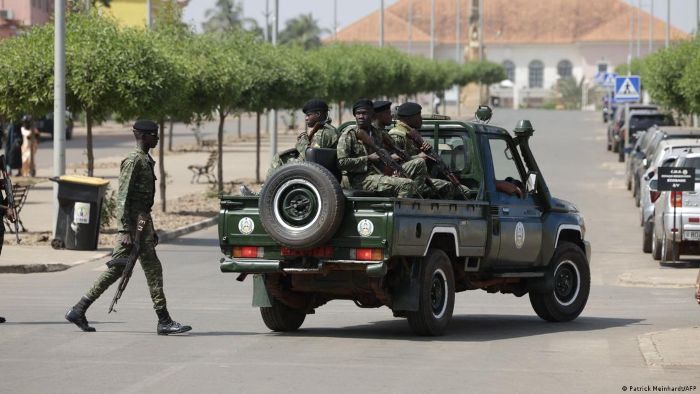
On Wednesday, soldiers sealed off the main route to the presidential palace, the national election commission, and the Interior Ministry, amid extended bursts of gunfire. Shortly afterward, a group of military officers appeared before the press to announce that they had removed President Embaló from power following the first round of general elections held on Sunday.
The officers declared the creation of a governing body they called the “High Military Command for the Restoration of Order,” asserting that they would take control of the state until further notice. General Denis N’Canha, head of the presidential military office, urged citizens to remain calm, insisting the new command was made up of representatives from every branch of the armed forces.
President Embaló later confirmed to France24 that he had been overthrown. Military sources quoted by AFP said he was being treated well. The coup leaders announced that they had halted the electoral process, arguing that the situation needed to be “clarified” before the country could return to constitutional rule.
In addition, the officers closed national borders and airspace and imposed a curfew. Security forces—including members of the presidential guard and an elite gendarmerie unit—established checkpoints across Bissau. Gunfire reportedly diminished by early afternoon.
The coup unfolded as the nation awaited official results from Sunday’s largely peaceful election. Both President Embaló and opposition candidate Fernando Dias da Costa had already declared victory on Tuesday, despite Guinea-Bissau’s two-round voting system, which typically requires a runoff if no candidate surpasses 50%.
Read Also;
The political tension comes against the backdrop of a turbulent history. Since gaining independence from Portugal in 1974, Guinea-Bissau has experienced four successful coups and numerous failed attempts. Just weeks before the election, several senior military figures were arrested for allegedly planning another coup. The government also forcibly expelled journalists from prominent Portuguese-language media outlets, including LUSA, in August as election season approached.
The situation remains fluid as ECOWAS and the international community watch closely for signs of further instability.