

(3 Minutes Read)
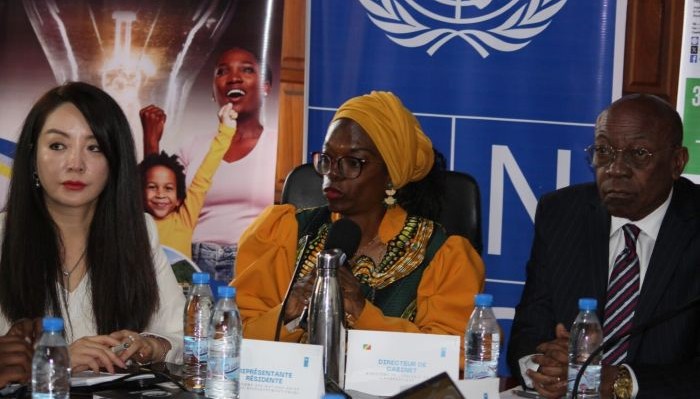
The Ministry of Energy and Hydraulics held a technical working session on November 19 in Brazzaville, in collaboration with the United Nations Development Programme (UNDP) and the National Union of Economic Operators of Congo (UNOC). The meeting focused on mobilizing financial and technical support for the Rural Electrification Programme (PEZor), a national initiative aimed at speeding up universal access to electricity—particularly in rural communities.
The objective of the meeting was to establish a structured platform to engage Chinese companies and institutions in supporting the financing, expertise, and rollout of the PEZor pilot phase, scheduled for 2026–2030.
Valued at nearly 211 billion FCFA (around USD 373 million), the PEZor program was developed by the government with the UNDP as the implementing partner. It consists of two main components: a micro-hydropower program—covering nineteen sites with capacities ranging from 31 kW to 5,000 kW in ten districts—and a solar program involving photovoltaic power plants and streetlight installations across fifty-eight districts.
Hosting the hybrid meeting, UNDP Resident Representative Adama Dian Barry highlighted to the Chinese partners, members of Nova, the significant opportunities for co-investment. She emphasized that the energy sector is a foundational pillar of economic and social development.
“Energy has become the backbone of any national development policy or structural economic strategy. Accelerating universal access to electricity by 2030 is central to the United Nations agenda, with Sustainable Development Goal 7 underscoring renewable energy as essential for improving global energy availability,” she stated.
UNOC President Daniel Ovaga stressed the urgent need for funding and partnerships to support PEZor, noting that rural electricity access is below 1%—a major obstacle to productivity, industrial growth, agricultural processing, and rural development. He outlined the program’s three strategic pillars, designed to connect the government, international investors, and the local private sector; to facilitate public-private partnerships crucial for energy infrastructure; and to support foreign companies, particularly Chinese firms, in integrating into the local economic landscape. Ovaga welcomed Nova International’s participation, citing its strong role in linking partners and mobilizing private investors.
Read Also;
https://trendsnafrica.com/afdb-loan-for-africas-electrification-through-renewable-energy/
Christina Huying, president of the Chinese group Nova International, stated that her organization—representing about 2,500 chambers of commerce and over 100,000 companies, and active in several countries through the Belt and Road Initiative—aims to help identify collaborative solutions.
“We are here to find pathways for development in Congo-Brazzaville. We are here to listen and work together toward a win-win partnership,” she affirmed. Frédéric Manienz, Director of the Office of the Minister of Energy and Hydraulics, described the meeting as a key step in aligning Chinese financial and technical engagement with global development frameworks and the implementation of PEZor during its 2026–2030 pilot phase. He noted that the call for Chinese partners aims to build alliances to support the deployment of hybrid mini-hydropower and solar systems across the country.