


(3 Minutes Read)
The Minister stressed that India and Africa need not compete in every sector; they could explore complementarities. He highlighted areas such as agriculture, food security, cooperative and self-help group movements, education, skill development, capacity building, research and development, innovation, start-ups, healthcare, pharmaceuticals, and renewable energy, which provide vast opportunities for mutual benefit.
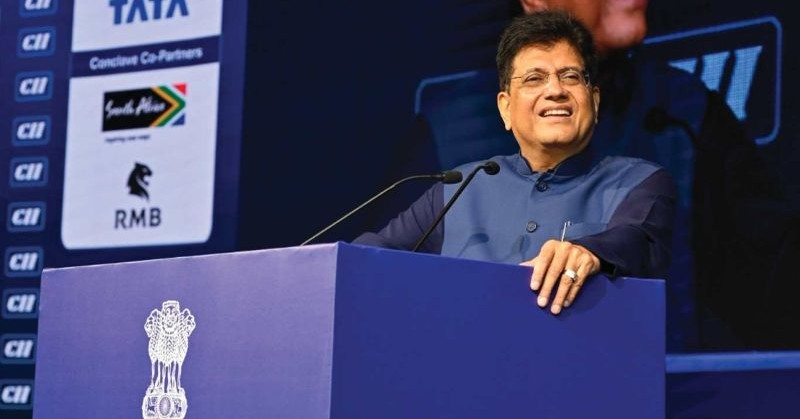
Piyush Goyal, India’s Commerce Minister, stressed the need for Africa and India to come together to double bilateral trade by 2020, tapping new opportunities. He was addressing the India-Africa Summit organized by Confederation of Indian Industry (CII) on 29th August 2025 at the Valedictory Session held in India’s capital, New Delhi.
The Minister stressed focusing on value addition, technology-driven agriculture, renewable energy, and healthcare. Piyush Goyal pointed out that bilateral trade between India and Africa is already fairly balanced, with India’s exports at USD 42.7 billion and imports at USD 40 billion. However, he underlined the untapped potential across regions,
The Minister stressed that India and Africa need not compete in every sector; they could explore complementarities. He highlighted areas such as agriculture, food security, cooperative and self-help group movements, education, skill development, capacity building, research and development, innovation, start-ups, healthcare, pharmaceuticals, and renewable energy, which provide vast opportunities for mutual benefit.
The Commerce Minister highlighted the immense potential for collaboration in the automobile sector. He noted that while Africa imports nearly USD 20 billion worth of motor vehicles annually, India currently supplies only about USD 2 billion of this demand. He underlined that Indian automobiles are globally competitive, both in terms of cost and quality, with manufacturing standards on par with the best in the world. He said that Indian manufacturers could play a vital role in meeting Africa’s growing demand for passenger vehicles, commercial vehicles, two and three-wheelers, and affordable electric mobility solutions. This, he added, opened up a wide delta of opportunity for African nations to access reliable, fuel-efficient, and environmentally sustainable vehicles at competitive prices. India could, in return, benefit from greater imports of African resources such as critical minerals, petroleum products, and agricultural commodities. This balanced exchange, he said, would help both regions expand trade, generate employment, and build long-term industrial partnerships.
Highlighting complementarities, the Minister observed that Africa could support India in areas such as critical minerals and petroleum products, while India could support Africa in food security, technological upgradation, manufacturing, and services. He mentioned that India is cost-competitive in services like architecture, engineering, IT, AI and telecom, while also offering potential in medical tourism.
“India and Africa together represent over 2 billion people and one-third of the global population. Our shared history, freedom struggles, and enduring friendship provide a strong foundation for the future,” Goyal said.
Read Also:
https://trendsnafrica.com/new-pathways-agenda-for-india-africa-strategic-cooperation/
The three-day Summit, which concluded on the 29th, was the meeting place of Indian businessmen, and their African counterparts to discuss newer strategies for boosting trade, investments, and technology transfer.