


(3 Minutes Read)
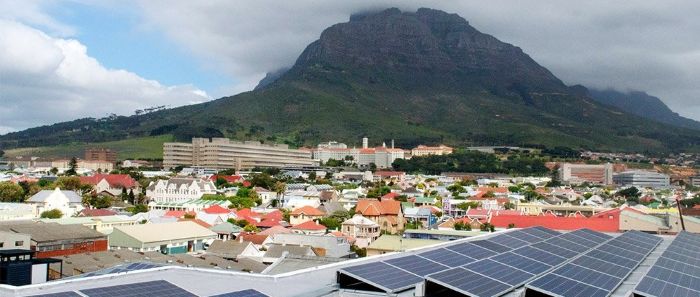
The City of Cape Town has unveiled a bold commitment to expand its renewable energy portfolio, announcing a substantial R183 million allocation to its solar feed-in initiative as part of a broader energy investment strategy. This forms a significant component of the city’s R71.2 billion energy budget, which spans the next three years and is supported by the implementation of new electricity tariffs.
Alderman Xanthea Limberg, Cape Town’s Mayoral Committee Member for Energy, emphasized that the budget will prioritize several key areas: improving public lighting, tackling energy theft and vandalism, and reducing the effects of load-shedding. For the current year alone, the city has earmarked R1.3 billion for capital energy projects. Of this, R75.5 million will be dedicated to upgrading street and public lighting infrastructure, while R183 million is specifically allocated to the Small-Scale Embedded Generation (SSEG) programme.
The SSEG initiative has grown in prominence since the launch of Cape Town’s “Cash for Power” programme in February 2024, which allows residents and businesses to receive financial compensation for feeding excess solar energy back into the grid. The city has emerged as a national leader in embedded generation policy, being the first major metro to publish a list of approved inverters for grid-tied solar systems, and among the earliest to introduce an online registration platform for SSEG participants.
Further cementing its role as a forerunner in renewable energy, Cape Town also provides the most cost-effective bidirectional electricity meters among South Africa’s large metros. These meters are essential for accurately tracking energy sent back to the grid.
By 1 February 2025, the feed-in programme had enrolled 1,842 customers — 1,090 residential and 752 commercial or industrial — who collectively earned over R50 million in either direct payments or credits for their surplus solar power.
Looking ahead, Limberg confirmed that the city will continue to prioritize energy diversification and security. This includes measures to protect critical infrastructure and align local tariff reforms with national strategies, particularly those under phase two of Operation Vulindlela, led by National Treasury.
Read Also:
“The city is participating in the Treasury’s tariff reform plans to ensure long-term service sustainability and cost-reflective pricing,” Limberg said. “These reforms are already beginning to influence our current budget and tariff frameworks, and we anticipate further alignment as municipalities across the country adopt the new standards.” Cape Town’s continued investment in sustainable energy not only enhances grid resilience but also positions the city as a model for urban energy reform in South Africa.