

(3 Minutes Read)
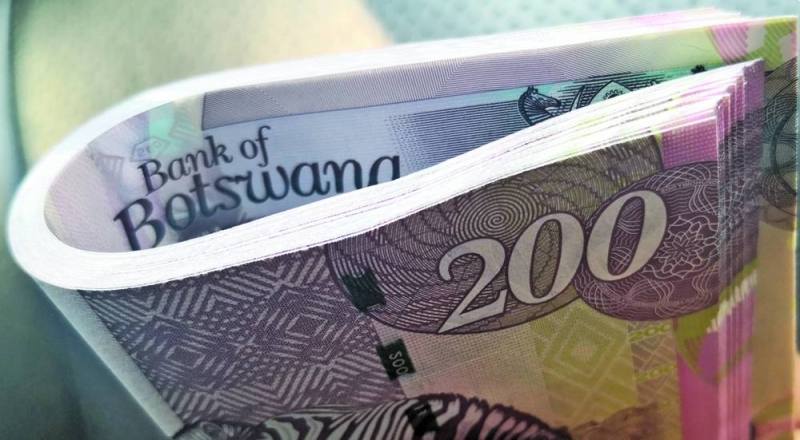
Botswana’s fixed exchange rate regime is facing its greatest challenge in decades, as the country’s foreign exchange reserves have dropped to record lows and its export earnings—heavily reliant on natural diamonds—continue to decline. In a recent report, BMI, a Fitch Solutions research firm, warned that unless conditions improve, Botswana may be forced to devalue its currency within the next two years.
According to the report, the cornerstone of Botswana’s economic stability—its diamond-led growth model—can no longer generate sufficient foreign exchange to sustain the current exchange rate peg. As of February 2025, the Bank of Botswana’s (BoB) reserves had declined to just 5.2 months of import cover, far below the 10-month comfort zone it traditionally maintains, and alarmingly close to the International Monetary Fund’s three-month minimum threshold.
BMI’s analysis attributes the persistent decline in reserves to a series of wide current account deficits dating back to 2018. Although reserves briefly rebounded in 2022 due to a post-pandemic spike in diamond demand and IMF assistance, the trend reversed in 2024, accelerating the downward trajectory.
The core of the problem lies in Botswana’s continued dependence on the export of natural diamonds—a sector now under siege from weakening global demand and competition from lab-grown alternatives. De Beers recently reported an 8% year-on-year drop in Botswana’s diamond output during the first quarter of 2025, a further indication of sustained softness in global markets.
To manage the growing shortfall, the BoB has increasingly relied on the Pula Fund—Botswana’s sovereign wealth fund—rather than drawing only from its Liquidity Portfolio, as previously mandated. This represents a significant deviation from long-established reserve management principles. The Pula Fund’s value has since plunged to its lowest level in 20 years, raising serious concerns about the sustainability of current practices.BMI cautioned: “Without a steady and reliable source of foreign exchange, this practice is not sustainable.”
Botswana’s foreign reserves are also being drained by capital outflows, driven by its relatively low domestic interest rates compared to those of major economies like South Africa and the United States—both key members of the pula’s currency basket. While these peers have hiked rates to combat inflation, Botswana has maintained a looser monetary stance, making it less attractive to global investors. Historically, Botswana could afford such independence due to its large reserves. But BMI now warns that the BoB’s ability to pursue a divergent monetary path may no longer be tenable.
BMI also flagged Botswana’s sluggish economic outlook. The country’s GDP is expected to grow more slowly than that of its trading partners. In the past, Botswana’s economic cycle often mirrored those of the U.S. and South Africa, but structural changes—especially the diminished role of natural diamonds—have weakened that correlation.
The report highlighted Botswana’s vulnerability to domestic shocks, such as the recessions in 2015 and 2024, which were not mirrored globally. BMI believes such country-specific downturns could become more frequent unless the economy is significantly diversified.
Faced with falling reserves, weak export performance, and widening macroeconomic imbalances, BMI concluded that a currency devaluation is now the most probable policy choice. Other options—such as implementing capital controls or surrendering monetary independence—were deemed riskier and counterproductive, especially as Botswana seeks to attract foreign investment.
BMI emphasized that a moderate and orderly devaluation, likely in the range of 10% to 15%, would both ease pressure on foreign reserves and improve the competitiveness of non-diamond exports, aligning with the government’s diversification goals. This would shift the exchange rate from the current P13.4/USD to between P14.9/USD and P15.7/USD.
Importantly, BMI ruled out a steep devaluation of 30–50%, noting that the pula is not grossly overvalued and that Botswana’s currency market remains functional, with no parallel exchange rate system. Historical data supports a gradual approach, with past devaluations averaging 8.5%.
Read Also;
https://trendsnafrica.com/botswana-devalues-its-local-currency-pula/
Despite the challenges, Botswana is not facing a Nigeria- or Angola-style currency crisis. The BoB has a strong track record in managing exchange rate policy, having executed seven successful devaluations between 1980 and 2005. Although it has maintained a crawling peg since then—avoiding large one-off adjustments—BMI believes the bank may soon need to act to avoid a more severe financial disruption.
In conclusion, Botswana’s once-prudent external buffers have eroded rapidly, and without a rebound in exports or significant structural reform, the country’s fixed currency regime may not survive in its current form. BMI’s recommendation is clear: a controlled devaluation is the least damaging path forward.