


(3 Minutes Read)
The high court’s decision to allow Lissu’s trial to proceed is the latest blow to the country’s opposition. In April, Lissu’s CHADEMA party, Tanzania’s biggest opposition formation,was also barred from the upcoming elections.
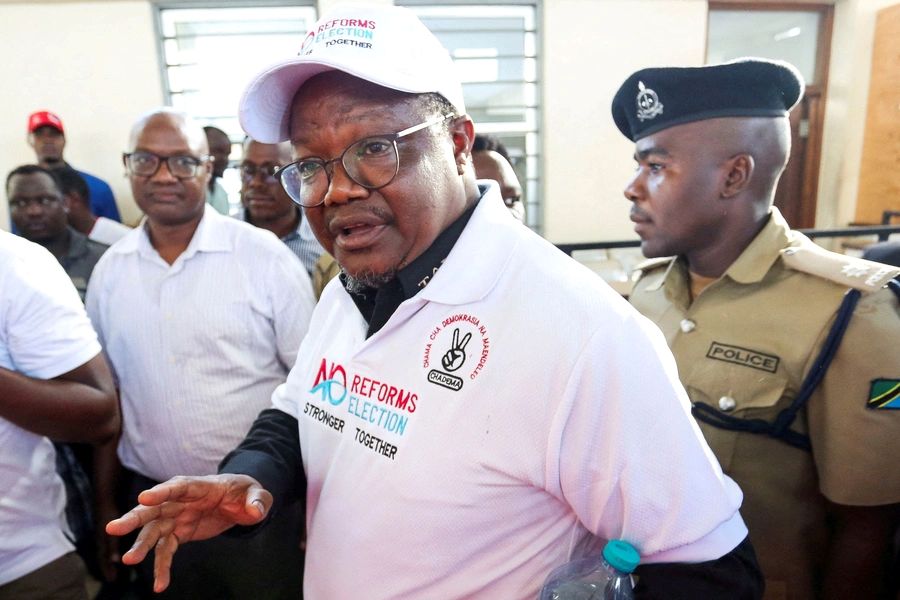
Pressure is mounting around Tanzanian opposition figures as presential and legislative elections approach. A Tanzanian court on Monday confirmed that the treason trial against opposition leader Thundu Lissu will go ahead. Judges rejected an appeal from Lissu’s team to dismiss his case over procedural flaws.
Lissu was arrested in April following a speech that prosecutors said called on the public to disrupt elections in October.He has remained in prison ever since. If convicted, he could face the death penalty.
The high court’s decision to allow Lissu’s trial to proceed is the latest blow to the country’s opposition. In April, Lissu’s CHADEMA party, Tanzania’s biggest opposition formation, was also barred from the upcoming elections.
On Monday, the election commission disqualified presidential candidate Luhaga Mpina. He leads the Alliance for Change and Transparency (ACT-Wazalendo), the country’s second largest opposition party. The ACT-Wazalendo dismissed the disqualification as “baseless” and politically-motivated.
Vote counting has begun following the closure of polling stations at 14:00 GMT in Malawi’s crucial presidential election.Current President Lazarus Chakwera is seeking a second term, running against former President Peter Mutharika, with both candidates focusing on revitalizing the economy. If no candidate secures more than half of the votes, a runoff may be held.
Approximately 3.7 million votes were cast, despite some delays at polling stations due to issues with fingerprint readers. The Malawi Electoral Commission has until September 24 to announce presidential results, with parliamentary outcomes expected by September 30.However, some polling stations experienced delays, primarily due to issues with biometric fingerprint readers.
Read Also:
Despite the challenges, the electoral commission addressed the situation, acknowledging that there were some “queueing challenges” but noting that these were successfully managed.Provisions were made for voters unable to write, allowing them to mark their ballots with an inked fingerprint, while others used traditional pens.