

(3 Minutes Read)
Africa, once known as Alkebulan—the “mother of mankind”—is a continent of 55 nations with a youthful population but predominantly aged leadership that often clings to power through constitutional manipulation and election irregularities. Growing frustration among the youth has fueled movements demanding transparency, jobs, and better governance, yet such agitation sometimes leads to instability and coups. To move forward, Africa needs innovative, country-specific reforms, stronger institutions, and deliberate efforts to empower and include young leaders in shaping the continent’s future.
The continent of Africa is mysterious and intriguing on many counts, starting with its origin. The name Africa is derived from the word Alkebulan, which roughly means “mother of mankind” or “Kingdom of Eden.” However, the Greeks and Romans found the original name difficult to pronounce and later coined the term Africa, which conveys the meaning of a region abundant in corn and honey.
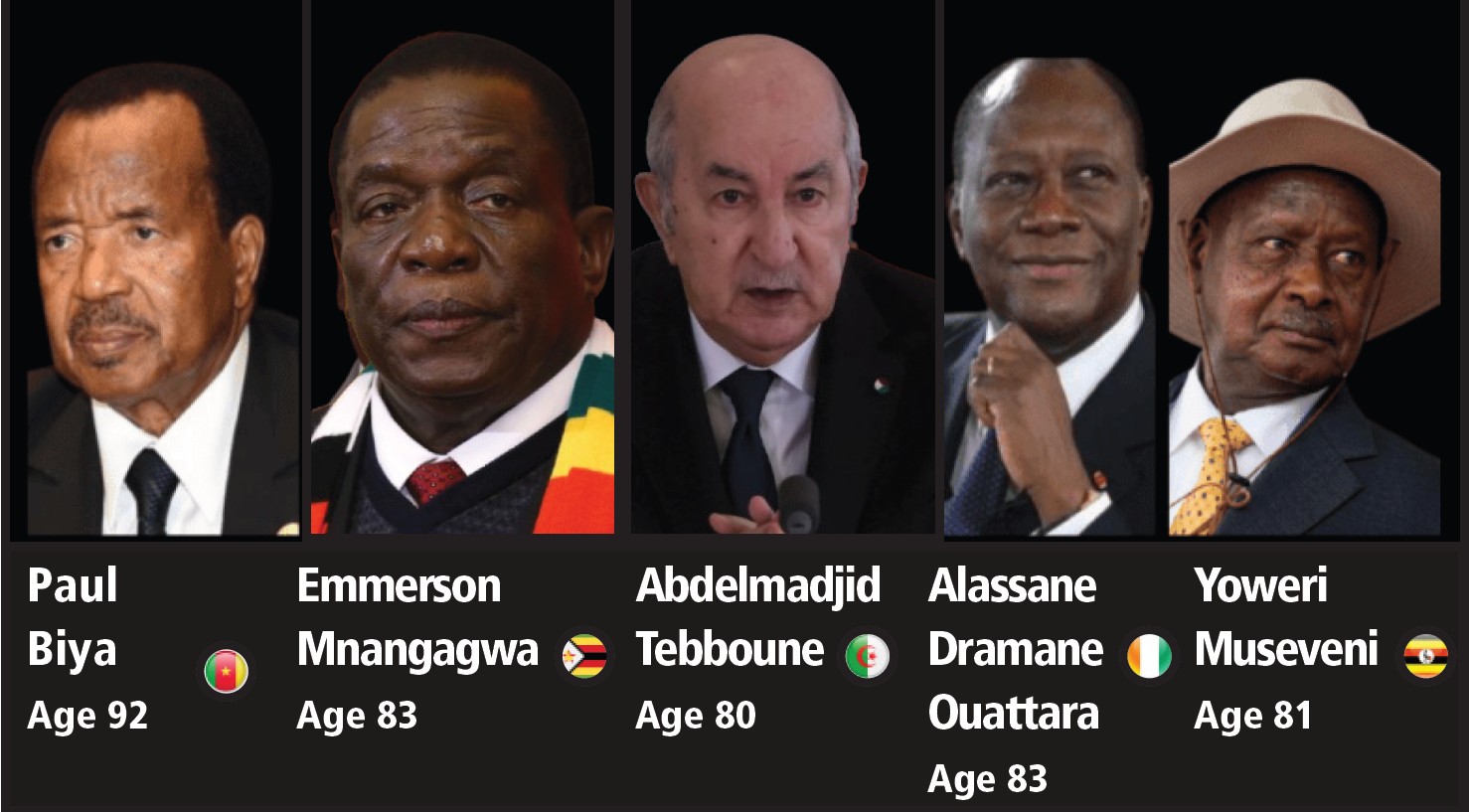
Millennia have passed since then. The continent now has 55 countries and a population of over 1.3 billion. It is also a region where the average age of ruling leaders’ hovers between 60 and over 90 years. Is this a mere historical accident, or a process embedded in a tribal hierarchical syndrome? Perceptions differ, and so do the narratives.
Africa has the youngest population in the world; most of its inhabitants are below 30 years of age. Barring a few exceptions such as Ethiopia and countries in the Sahel region—particularly Mali, Burkina Faso, and Niger—where young rulers came to power mostly through undemocratic processes like coups and military takeovers, the rest of the countries are governed by septuagenarians, octogenarians, and even nonagenarians.
That is not all. Many of these leaders continue to maintain their grip on the governance structure for decades by repeatedly getting re-elected—often by circumventing constitutional limits of two terms through referendums. Such high-handedness is frequently followed by alleged election rigging, disqualification of opposition parties and leaders, and suppression of dissent. These trends are evident in the ongoing electoral processes of several countries that recently went to the polls, such as Cameroon, Ivory Coast, and now Tanzania. Countries preparing for general elections, such as Uganda, fear a repeat of election-related protests and agitations, given their past records.
Can overaged leaders transform governance structures to meet the aspirations of the youth—often referred to as Generation Z? The continuing post-election disturbances in several countries cannot be ignored. Though different in ethos and spirit from the Arab Spring of yesteryears, these movements carry a collective will for radical change—to root out corruption, ensure better civic facilities, and end dynastic or one-party rule. Similar developments that once occurred in countries like Indonesia and Sri Lanka are now visible on the African canvas. Moreover, stifled political freedom creates fertile ground for coups and other destabilizing events.
Amid the growing demand for change in governance, analysts are questioning why a young president in Madagascar failed to unite the people and had to flee the country after youth-led agitations over poor education and civic amenities. Reports of attempted coups in reform-oriented countries like Nigeria are also worrying, suggesting that young people desire change too quickly, forgetting that reforms require a gestation period to yield results. Alarmingly, in some countries such as Nigeria, Ghana, Botswana, and Namibia, reforms are creating a new class of affluent individuals who are able to reap the benefits of change faster than the rest, thereby widening income disparities.
Aged rulers are not unique to Africa; this is a common phenomenon worldwide. In advanced countries like the United States, China, and Russia, the average age of leaders exceeds seventy, and the new generation of young leaders is not yet prominent. So, why should one set of standards apply to Africa and another to the rest of the world? The key difference is that those countries have stronger constitutional safeguards that prevent widespread agitation, unlike many parts of Africa.
Therefore, the yardstick used to assess Africa’s ruling structures should differ from that applied elsewhere. It remains the least developed continent, with a significant number of countries categorized as least developed, where poverty is rampant, unemployment widespread, and education and healthcare grossly inadequate. Leaders must collectively address these challenges.
While multilateral organizations have a defined role in helping Africa break free from the vicious cycle of poverty, unemployment, and low income, each country must craft its own plan for change—anchored in strong political will. Oil-rich nations should establish exclusive social development funds that are not squandered through profligacy. Mineral-rich countries like the Democratic Republic of Congo (DRC), Mozambique, Angola, and Zimbabwe should levy an additional fee on exported minerals. The African Union (AU) and African Development Bank (AfDB) need to design a pilot initiative to substantially increase employment by empowering MSMEs to grow and prosper, rather than be stifled by bureaucracy and the influx of multinationals.
Yes, there are pathways to address these challenges—but they must be innovative, country-specific, and locally adaptive. Beyond these, there should be a conscious effort to groom young leadership through inclusion and by granting unfettered freedom for dissent.