

(3 Minutes Read)
In a major policy shift aimed at asserting control over the continent’s abundant natural resources, the African Union (AU) has announced plans to form a coalition of mineral-producing countries to better manage and benefit from the surging global demand for critical minerals. The announcement follows the AU’s recent climate summit held in Addis Ababa, Ethiopia, where leaders from across the 54-member bloc gathered to align their climate and economic development strategies.
In a statement released Wednesday, the AU revealed that it will “explore and support the establishment of a coalition of critical mineral-producing countries of Africa to promote strategic and sustainable regional cooperation.” This move is part of what the AU is calling “Africa’s Green Minerals Strategy,” a framework designed to leverage Africa’s mineral wealth in support of climate-resilient development and to reduce reliance on exploitative foreign partnerships.
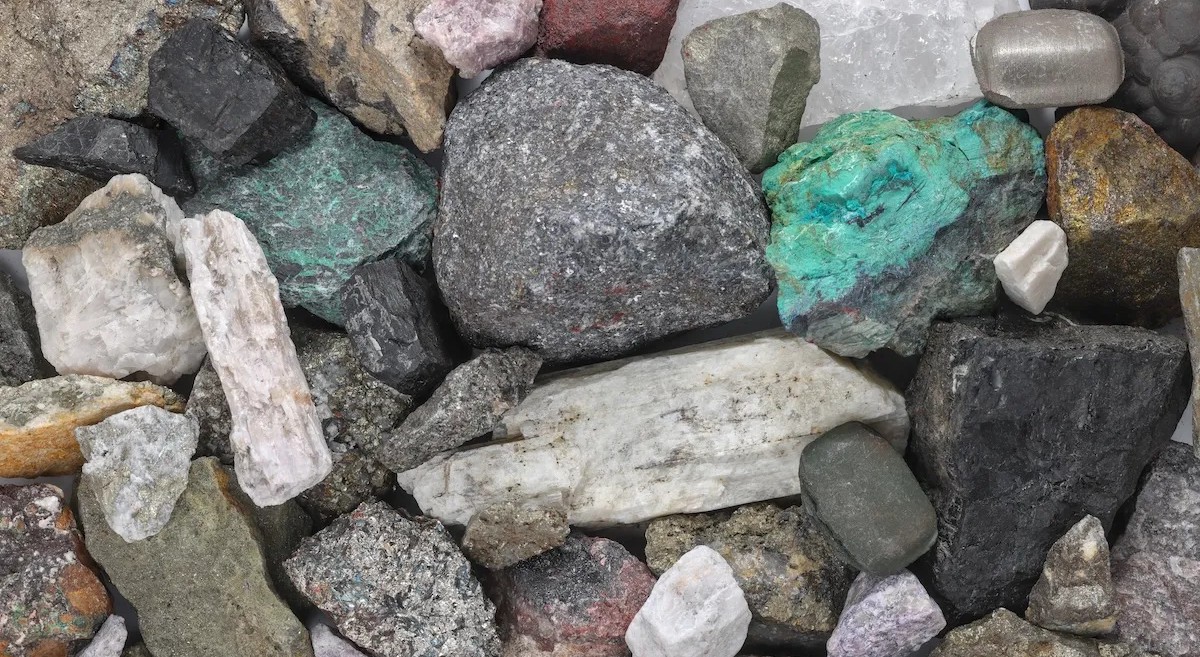
Africa is home to vast reserves of crucial minerals and fossil resources, from the cobalt and rare earths of the Democratic Republic of Congo (DRC) to the oil fields of Nigeria. These materials are essential for green technologies such as solar panels, electric vehicles, and wind turbines—technologies in increasingly high demand as the world transitions away from fossil fuels.
This strategy emerges amid a growing geopolitical competition between global powers, particularly the United States and China. Washington is actively seeking to diversify its sources of critical minerals—many of which are currently sourced through China—by turning to African countries like the DRC. The AU’s initiative signals a desire to avoid being caught in the middle of this strategic rivalry and instead to negotiate from a position of unity and strength.
The International Energy Agency (IEA) projects that demand for critical minerals will quadruple by 2040, fueled by the accelerating shift toward renewable energy. Recognizing this, UN Secretary-General António Guterres remarked in August that Africa has the potential to become a “renewable superpower” if it strategically capitalizes on its natural resources.
Despite its rich natural endowment, Africa continues to suffer the worst effects of climate change, even though it contributes the least to global greenhouse gas emissions. The AU emphasized that African countries are “the least able to meet the costs of adaptation, resilience, sustainable development and mitigation.” This disparity has driven renewed calls for stronger global support and more equitable climate finance.
During the Addis Ababa summit, the AU called for “stronger international commitments and partnerships” to close the significant funding gap facing African nations in their climate response efforts. However, it also urged self-reliance, stating that Africa must “enhance [its] capacity to mobilise resources and support climate action financing in Africa.”
At COP29 in Azerbaijan last year, wealthy nations pledged $300 billion annually to support climate efforts in developing countries. But this amount has been widely criticized as insufficient. One of Brazil’s key goals for COP30, scheduled for November in Belém, is to identify and develop alternative sources of climate finance to address this shortfall.
Read Also:
The AU’s bold step to organize a pan-African coalition of mineral-producing nations signals a shift away from the historic pattern of resource exploitation toward one of strategic empowerment. If successful, Africa’s Green Minerals Strategy could position the continent as both a pivotal supplier of green technology inputs and a leader in shaping a more equitable, climate-resilient global economy.