
(3 Minutes Read)
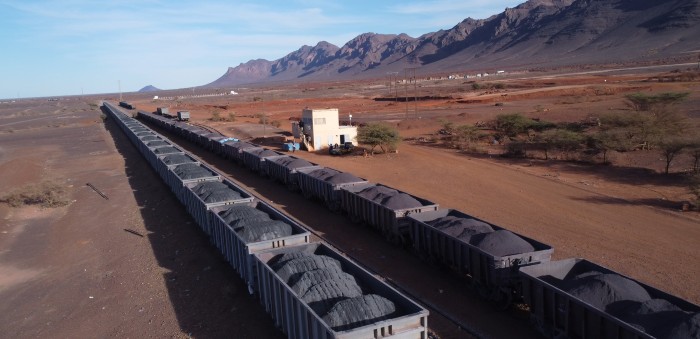
The African Development Bank (AfDB) and the European Investment Bank (EIB) have jointly approved a USD 275 million financing package to revitalise and expand Mauritania’s principal railway corridor. This investment aims to reinforce the nation’s industrial transport backbone, particularly the iron ore supply chain that underpins Mauritania’s extractive economy.
Under the agreement, the AfDB will contribute USD 150 million, while the EIB will provide USD 125 million, with the overall package backed by the European Union. Announced at the Africa Investment Forum in Rabat, the funding will support the modernisation of the rail line that connects the mining centre of Zouerate in the northeast to the Atlantic port of Nouadhibou.
This railway is Mauritania’s most critical freight artery, especially for Société Nationale Industrielle et Minière (SNIM), the state-owned mining and industrial company that also stands as the country’s largest employer. The upgrade will not only strengthen the resilience and efficiency of the existing infrastructure but also extend the corridor by 42 kilometres to reach new mining zones in El Aouj and Atomai—expansion expected to boost transport capacity ahead of future production growth.
Beyond track improvements, the financing will enable the purchase of new locomotives, wagons, and maintenance equipment. These enhancements are designed to support long-term operational sustainability and anchor broader infrastructure renewal across the West African transport corridor.
The collaboration between the AfDB and EIB highlights continental priorities to deepen intra-African trade and reinforce vital industrial routes. The rail line, while central to iron ore exports, also serves as a model for how infrastructure can strengthen economic connectivity across the Sahel and Maghreb regions.
As African economies pursue more integrated and diversified growth strategies, investments of this nature signal a shift in development thinking. The project underscores a move away from donor-driven models toward partnership-based, state-led industrial advancement—an approach grounded in African institutions and aimed at fostering lasting economic resilience.
At the same time, the initiative raises important considerations regarding environmental and social governance, land rights, and equitable benefit-sharing within mining corridors. Although lenders have emphasised sustainability, civil society groups are expected to closely monitor implementation, given the railway’s influence on local settlement and labour dynamics.
The railway modernisation is part of Mauritania’s broader ambition to consolidate control over strategic infrastructure and shape industrial policy with regional implications. Given SNIM’s economic significance, the project’s impact is likely to extend beyond national borders, aligning with broader aspirations for an African economic renaissance that reimagines infrastructure as a tool of sovereignty and transformation.
By linking mineral-rich interior zones with key maritime gateways, the improved railway strengthens Mauritania’s role as a logistical hub within West Africa and complements the economic integration goals of the African Continental Free Trade Area (AfCFTA). The AfDB and EIB’s involvement illustrates how multilateral finance can be leveraged to support nationally driven, regionally important infrastructure.
Read Also;
Ultimately, the investment in Mauritania’s railway corridor reflects a maturing development landscape—one in which infrastructure is not only about efficiency, but about reclaiming African agency, enhancing connectivity, and advancing a continent-wide industrial vision.