


(3 Minutes Read)
The 7th AU–EU Summit in Luanda marked a decisive shift from donor–recipient dynamics to a co-investment partnership centred on African leadership, renewable energy, and long-term structural transformation. Leaders from both continents framed the moment as a turning point toward an equitable, future-focused relationship grounded in shared prosperity and mutual accountability.
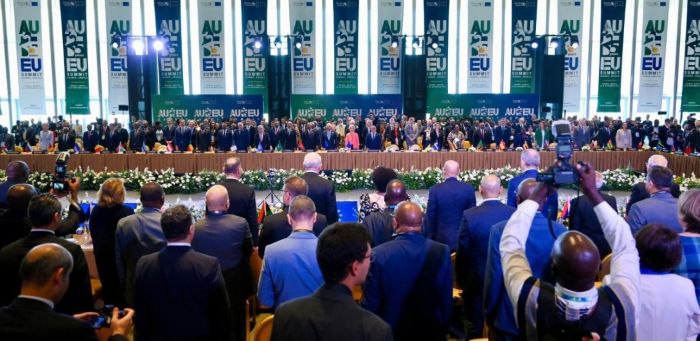
When African and European leaders met in Luanda, Angola, on 24–25 November 2025 for the 7th African Union–European Union Summit, the gathering marked far more than a 25-year milestone. It became a critical point for reshaping the relationship between the two continents amid a rapidly shifting, multipolar world. Since the inaugural Cairo summit in 2000, global dynamics have evolved considerably, yet the core belief that peace and prosperity must be jointly pursued has only grown more pressing.
The European Union remains Africa’s largest economic and development partner. However, this year’s summit highlighted a clear move away from traditional donor–recipient relations toward a partnership model based on co-investment, shared gains, and long-term structural transformation. The European Commission reports that more than half of all flagship Global Gateway investments—Europe’s initiative supporting infrastructure, digital networks, climate resilience, and industrial development—are currently directed toward Africa.
Africa, meanwhile, has become the EU’s fourth-largest trading partner and an increasingly influential actor in the global energy landscape. The Luanda summit sought to strengthen cooperation in key areas such as sustainable development, governance, mobility, and renewable energy. Conversations throughout the summit underscored a deepening acknowledgement that Africa is not a passive beneficiary but an active architect of a new global compact.
In a pre-summit interview, European Commission President Ursula von der Leyen reaffirmed the EU’s commitment to a genuine, future-focused partnership. Reflecting on the symbolic connection to the first summit in Cairo, she presented Luanda as an opportunity to abandon outdated paradigms and prioritise long-term investment in African-driven solutions.
EU engagement in Uganda was highlighted as an example of this evolving approach. Uganda’s influential role in regional stability and peacebuilding has made it a strategic political partner. EU-supported initiatives around the Lake Victoria basin increasingly target structural economic transformation—from energy infrastructure and digital integration to industrial development—reflecting a broader shift toward resilience and African ownership.
Clean energy investment stands out as one of the most tangible signs of this new direction. Under the Global Gateway framework, the EU and South Africa launched the Scaling Up Renewables in Africa campaign in 2024 to tackle the continent’s massive electricity access gap. In just one year, the initiative has mobilised over €15 billion for renewable energy projects across Africa.
In Uganda, EU-backed programmes are expected to expand energy access to three million people and thousands of businesses by 2027. These efforts include both grid and off-grid systems focused on underserved rural areas, as well as regional interconnection projects linking Uganda’s power grid with those of South Sudan and Tanzania. Such networks aim to boost electricity trade, enhance system reliability, and optimise the use of renewable resources.
Von der Leyen described this model as one of equitable partnership—European investment advancing African objectives. This marks a significant shift from earlier narratives of aid and dependency, aligning more closely with calls from African leaders for investment that enhances sovereignty, promotes value addition, and integrates African economies into global value chains on fairer terms.
Ultimately, the Luanda summit was not merely ceremonial. It signalled a turning point. As global competition for influence and resources intensifies, Africa and Europe increasingly recognise themselves as co-stakeholders navigating a complex international landscape. The strength of this partnership will depend on sustained accountability, fairness, and a firm respect for Africa’s agency.
Read Also:
As the summit ended, African representatives stressed the need for concrete results on the ground. The real measure of initiatives like the Global Gateway will be their success in supporting bottom-up development models that reflect Africa’s diversity, complexity, and ambitions.
Twenty-five years after Cairo, the moment calls for a new vision of intercontinental relations—one that moves beyond dependency and embraces an architecture of solidarity. Such a framework must centre African leadership, acknowledge shared destinies, and commit to development pathways that are equitable, transformative, and genuinely collaborative.