

(3 Minutes Read)
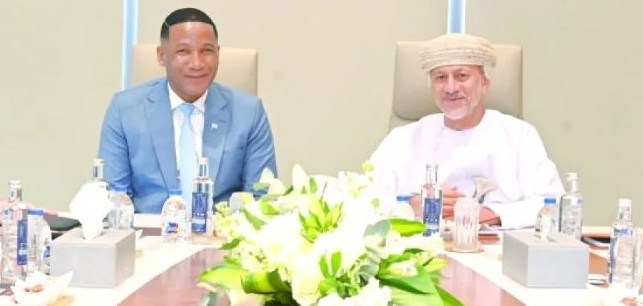
The Republic of Botswana and the Sultanate of Oman have entered a new era of intercontinental cooperation with the signing of four major agreements across the energy, mining, and financial sectors. Concluded during the visit of Abdulsalam bin Mohammed al Murshidi, Chairman of the Oman Investment Authority (OIA), the agreements signal a modernised Gulf–Africa partnership model grounded in shared value, long-term strategy, and sustainable development rather than extractive practices.
Botswana’s President, Duma Gideon Boko, expressed satisfaction with the speed and harmony that characterised the negotiations, emphasising the strong alignment between both nations. He noted that earlier dialogues and mutual visits had matured into a partnership capable of transforming Botswana from an energy-importing nation into a potential regional power exporter. Such a shift would not only support the country’s energy self-sufficiency goals but also strengthen regional integration and trade within the Southern African Development Community (SADC).
The first agreement formalises cooperation between Oman’s OQ Group and Botswana Oil. This partnership aims to develop energy infrastructure, expand storage capacity, and promote knowledge exchange in regulatory frameworks, technical standards and institutional capability-building. The emphasis on skills transfer highlights a deliberate move away from traditional investment models toward more inclusive and capacity-focused collaboration.
A second agreement — also involving OQ Trading and Botswana Oil — sets out a framework for energy trading, supply mechanisms and regional market integration. It includes a long-term supply model for Botswana and its neighbouring markets, advancing an Africa-centred vision of regional energy cooperation. The inclusion of a “matching right” mechanism gives OQ Trading priority engagement opportunities, balancing competitive principles with supply chain reliability.
According to OQ Group CEO Ashraf bin Hamad al Mamari, these agreements reinforce Oman’s diversification strategy and its emerging role as an influential partner in Africa’s energy transition. With a presence in 11 African countries through the supply of crude oil, LPG and refined petroleum products, OQ’s collaboration with Botswana showcases how Gulf–Africa relations can evolve into development-oriented, strategic alliances.
The third agreement, signed by Botswana’s Ministry of Minerals and Energy and O-Green, an Omani renewable energy entity, outlines plan for solar and wind projects with integrated storage capacity of up to 3 gigawatts. Its dual focus on on-grid and off-grid solutions reflects a clear understanding of Southern Africa’s uneven energy access and a commitment to delivering clean, scalable power solutions. Representatives Mustafa bin Mohammed al Hinai and David Tsheole reaffirmed their shared vision of long-term, cross-border energy resilience.
The fourth accord, between Maaden Investment Group and the Botswana Geoscience Institute (BGI), focuses on exploring mineral resources such as gold and diamonds. While mineral extraction has historically raised concerns in Africa’s external partnerships, this agreement incorporates technology transfer and technical cooperation, underscoring a shift toward shared expertise and stronger local ownership. The collaboration draws on Oman’s global mineral production partnerships, demonstrating a circular and mutually reinforcing model of South–South cooperation.
Together, these agreements represent a strategic reframing of Africa’s international partnerships — one rooted in mutual respect, development equity, and future-oriented planning. Botswana’s diversified investment approach and commitment to institutional capacity mark a departure from past patterns that cast African states merely as capital recipients or raw material suppliers.
Read Also;
Far from conforming to outdated paradigms, the Botswana–Oman partnership reflects how African nations are proactively shaping their development trajectories. It showcases a multi-dimensional foreign policy approach that aligns domestic ambitions with regional goals while fostering balanced, non-extractive cooperation with global partners.
This collaboration not only accelerates Botswana’s national development but also serves as a model for reimagining Pan-African partnerships with international counterparts. As Africa continues to claim greater agency in defining its development path, such grounded and reciprocal engagements demonstrate the promise of relationships built on shared vision rather than historical imbalance.