


(3 Minutes Read)
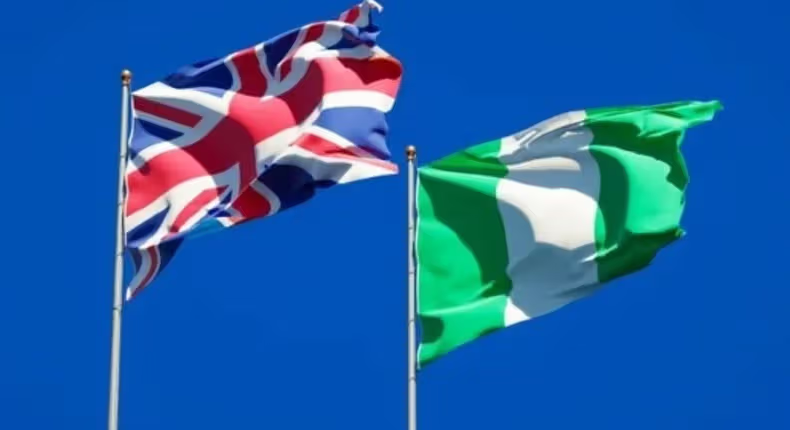
Nigeria’s trade prospects have received a significant uplift following confirmation from the United Kingdom that nearly 3,000 Nigerian-made products now qualify for zero or reduced import tariffs under the UK’s Developing Countries Trading Scheme (DCTS).
Launched in 2023, the DCTS is part of the UK’s broader effort to deepen economic partnerships with developing nations, especially across Africa, by expanding their access to its extensive consumer market. For Nigeria, this development marks a crucial opportunity to strengthen its position in global trade and reduce dependence on traditional markets.
The new tariff concessions cover several high-potential export sectors, including agriculture, textiles, leather goods, and light manufacturing—industries that have long struggled to compete internationally due to high-cost barriers and limited market access.
According to Mujina Kaindama, the UK Head of Trade Policy for Nigeria, the scheme aligns with the UK’s post-Brexit trade strategy, which emphasizes stronger commercial and investment ties with African economies. Speaking at the UK DCTS Roadshow in Kano, organized by Propcon+ in partnership with the Kano State Government and the Federal Ministry of Trade and Investment, Kaindama described the initiative as a “transformative platform” for Nigerian exporters.
“These reforms create an export platform for Nigeria at a time when global tariffs are rising and traditional markets are under pressure,” Kaindama stated. She further noted that the DCTS would enable Nigerian firms to connect directly with UK buyers while encouraging value-added production within Nigeria. “Exports are not just a policy priority—they are an economic necessity,” she emphasized.
Representing the Nigerian government, Orji Gertrude, Director of the Investment Promotion Department at the Federal Ministry of Trade and Investment, praised the UK-Nigeria partnership that has guided the scheme’s implementation. She highlighted ongoing efforts to equip local entrepreneurs with the knowledge and tools necessary to benefit from the tariff relief program, stressing that information access and regulatory readiness are key to maximizing the scheme’s impact.
The announcement comes at a critical juncture in global trade, characterized by growing protectionism and tariff tensions, especially since the United States began scaling back preferential trade arrangements such as the African Growth and Opportunity Act (AGOA). With the U.S. market becoming less accessible, the UK’s DCTS offers Nigeria a valuable alternative export route, helping cushion the economy against global trade disruptions.
Read Also;
However, trade analysts caution that tariff relief alone is not enough. For Nigeria to fully capitalize on the DCTS, it must strengthen logistics networks, certification systems, and regulatory compliance frameworks to meet the quality standards demanded by UK importers. Enhancing manufacturing capacity and ensuring supply chain reliability will be vital for sustaining export competitiveness.
If implemented efficiently, the DCTS could emerge as one of Nigeria’s most strategic tools for driving non-oil exports, diversifying its trade partnerships, and securing long-term resilience against global tariff instability. In essence, the UK’s latest trade concession not only broadens Nigeria’s export horizons but also signals a renewed era of economic cooperation between both nations—anchored on shared goals of inclusive growth and sustainable trade.