


(3 Minutes Read)
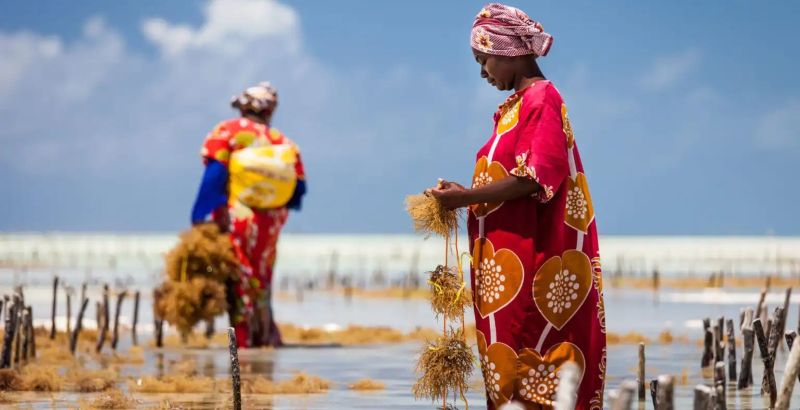
An estimated 25,000 people, most of them women, make their living from seaweed farming across the archipelago, according to Zanzibar’s government. The trade ranks third in export value after tourism and spices.
Seaweed farming has long been a pillar of Zanzibar’s coastal economy. But today, a global boom — driven by demand from the food, pharmaceutical, and cosmetics industries — is giving the island’s farmers renewed hope. The algae’s natural thickening and stabilizing agents are found in everything from toothpaste to face cream.
An estimated 25,000 people, most of them women, make their living from seaweed farming across the archipelago, according to Zanzibar’s government. The trade ranks third in export value after tourism and spices.
In a society where fewer than half of women are formally employed, seaweed farming offers independence and income — though often at a steep physical cost.
Long hours in the water also cause back pain, dehydration, and skin irritations. For many women balancing household duties, the work can feel endless. Yet, they persist — driven by the promise of better livelihoods and pride in sustaining their communities.
What was once a near-shore activity is now being pushed further out to sea. Rising water temperatures linked to climate change are making traditional shallow-water farms less viable.
Milele’s programs now include swimming lessons for women farmers, aiming to reduce accidents and drowning incidents that have increased in recent years.
Read Also:
https://trendsnafrica.com/lindi-to-develop-as-a-blue-economy-hub-of-tanzania/
Global players are also taking notice. In 2020, commodity giant Cargill partnered with The Nature Conservancy to invest in Zanzibar’s seaweed sector, aiming to improve yields and raise incomes. Meanwhile, international bodies like the Global Seaweed Coalition are promoting sustainability and fair labor standards as production scales up.