

(3 Minutes Read)
Ghana and the United Kingdom have officially signed a $256 million bilateral debt restructuring agreement, marking a pivotal moment in Ghana’s efforts to stabilise its public finances and advance its economic recovery. The agreement extends the repayment timeline of Ghana’s debt to the UK by 15 years, providing much-needed fiscal space to support growth-driven policies.
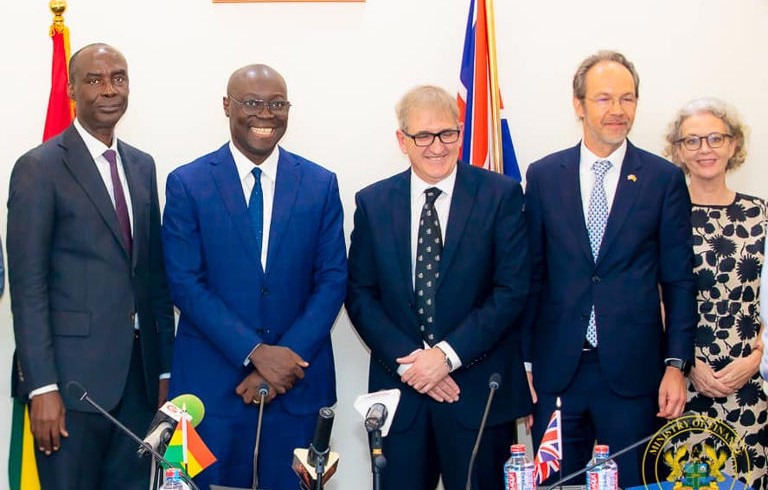
The signing, held on Wednesday, was attended by John Humphrey, UK Trade Commissioner for Africa, and Cassiel Ato Forson, Ghana’s Finance Minister. The deal aligns with the Paris Club and G20 Common Framework for Debt Treatments, underscoring global support for Ghana’s economic reform agenda.
Humphrey stressed that this is more than a bilateral pact—it is part of a broader international initiative to ensure Ghana’s debt sustainability while allowing it to pursue its development goals. “By restructuring this debt in collaboration with the Paris Club and G20, we are helping create the fiscal space Ghana needs to realise its bold vision for the future,” he remarked.
Finance Minister Forson highlighted the government’s plans to channel the UK’s concessional financing into critical infrastructure, particularly road projects. These investments aim to boost connectivity, generate employment, and stimulate economic activity across both rural and urban areas. “The government of Ghana is committed to doing its part to ensure timely disbursement and project execution,” Forson added.
This agreement follows a period of severe economic challenges for Ghana, which led to a bailout under the IMF’s Extended Credit Facility. Since then, stabilisation policies and ongoing debt relief negotiations have started to restore market confidence and lay the groundwork for sustained recovery. Forson expressed hope that the UK deal would serve as a positive signal to other creditors, with further talks underway through the Common Framework.
However, experts caution that while the restructuring offers temporary relief, Ghana’s long-term debt sustainability remains a pressing concern. The country’s public debt once surpassed 70% of GDP at the height of its fiscal crisis, highlighting the need for continued fiscal discipline and deep structural reforms.
Read Also;
Ghana’s agreement with the UK also mirrors a growing trend across Africa, where countries like Zambia and Ethiopia are using the G20 Common Framework to manage debt pressures intensified by the pandemic, external shocks, and tighter global financial conditions. As such, the deal represents not just a bilateral breakthrough but a significant test case for how African economies can partner globally while maintaining control over their development trajectories.