

(3 Minutes Read)
Malawi is currently in the process of counting votes following a high-stakes presidential election held on Tuesday, as the country grapples with its worst economic and humanitarian crisis in decades. The election took place against the backdrop of soaring inflation, severe food insecurity, and increasingly harsh impacts from climate change—factors that have dominated political discourse and shaped voter concerns.
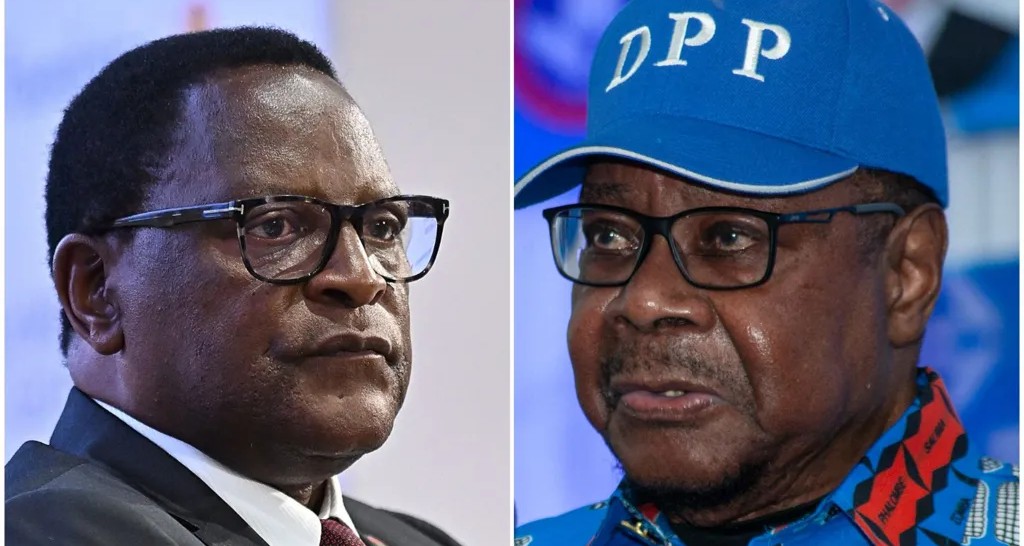
Seventeen candidates contested the presidency, but the election is widely considered a showdown between two familiar political rivals: incumbent President Lazarus Chakwera, aged 70, and former President Peter Mutharika, aged 85. This is the third electoral face-off between the two. Mutharika secured victory in their first encounter in 2014. However, in a historic 2020 rerun—ordered after the original vote was annulled due to widespread irregularities—Chakwera won decisively with 59% of the vote.
Chakwera, an evangelical pastor turned politician, is running for a second term with a campaign focused on reviving Malawi’s struggling economy and fighting corruption. However, his first term has been marred by persistent economic challenges and accusations of favoritism in government appointments. Mutharika, a former law professor, is campaigning on his past record of infrastructure development but is similarly tainted by prior corruption scandals during his administration.
Other notable candidates include former President Joyce Banda, the only woman in the race. However, analysts agree that none of the challengers have mounted a serious threat to the two leading contenders.
Polling stations opened early Tuesday with strong initial voter turnout. Long queues were observed across several districts. However, participation declined sharply as the day progressed. By mid-afternoon, the Malawi Electoral Commission (MEC) reported a turnout of just 51%, a significant drop compared to 64% in the 2020 presidential rerun. Some analysts attributed this decline to voter fatigue and disillusionment with both leading candidates amid worsening living conditions.
Malawi, a landlocked southeastern African country of over 21.6 million people, is facing multiple converging crises. Inflation has surged beyond 27%, while chronic foreign currency shortages and fuel supply disruptions have paralyzed key sectors. The country remains heavily reliant on agriculture—especially tobacco exports—but the industry has been ravaged by erratic weather patterns linked to climate change.
In 2023, Cyclone Freddy caused widespread devastation, killing over 1,200 people and destroying large swaths of farmland. Recurring droughts have worsened hunger, and the World Bank estimates that 70% of Malawians live on less than $2.15 per day, placing the country among the poorest in the world.
Read Also:
https://trendsnafrica.com/malawi-heads-for-poll-today-economic-issues-main-election-plank/
In addition to choosing a president, voters also cast ballots for members of parliament and local councillors across 35 local government areas. If no presidential candidate secures an outright majority—over 50% of the vote—a run-off election will be required within 60 days, according to Malawi’s electoral laws. Provisional results from the first round of voting are expected by Thursday, with the final tally to follow soon after, pending any legal challenges or recounts.