

(3 Minutes Read)
The International Monetary Fund (IMF) has publicly endorsed the Bank of Ghana’s (BoG) latest foreign exchange (forex) regulations, describing them as an important move to reinforce the Ghanaian cedi as the country’s sole legal tender. The endorsement also reflects the IMF’s support for the BoG’s broader efforts to promote transparency and uphold international anti-money laundering (AML) standards in Ghana’s financial system.
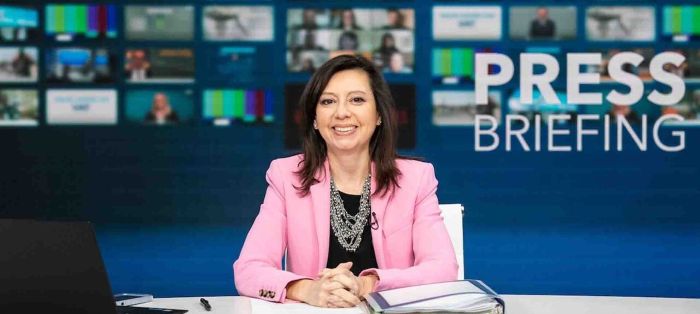
At a press briefing held on Thursday, September 11, 2025, IMF Communications Director Julie Kozack stated that the new forex directives are consistent with international best practices aimed at strengthening financial integrity and ensuring that foreign exchange transactions follow formal, regulated channels.
“The Bank of Ghana’s latest directives are intended to reinforce the role of the cedi as the sole legal tender in the country,” Kozack said. “They’re meant to tighten controls on foreign currency transactions and to promote formal channels for the provision of remittances and trade. And these are steps toward broader financial integrity, compliance with anti-money laundering rules, and greater transparency in the FX market.”
The BoG’s directive—issued on August 20, 2025—specifically targets large-scale foreign currency transactions. Under the new policy, commercial banks are now prohibited from disbursing foreign exchange in cash to large corporations unless such payments are backed by prior deposits of equivalent value. This measure is aimed at discouraging the practice where bulk oil distributors, mining firms, and other large entities secure foreign currency from the banks without any corresponding deposits, a trend that has put undue pressure on the foreign exchange market and weakened the cedi.
The central bank views this policy as part of a broader strategy to stabilize the local currency, which has faced volatility in recent years. By mandating that large foreign exchange transactions be fully collateralized, the BoG hopes to reduce speculative demand for hard currency and ensure more predictable flows within the forex system.
This latest directive adds to a string of measures the BoG has implemented over the past year to enhance exchange rate stability. These include increased surveillance of forex bureaux, more frequent dollar auctions to ensure liquidity, and tighter regulation of foreign currency accounts.
Read Also;
https://trendsnafrica.com/ghana-faces-inadequate-tax-revenue-imf/
Market observers believe the IMF’s support lends greater credibility to Ghana’s foreign exchange management framework. Given that currency stability is a key pillar of the country’s broader economic recovery efforts, the international backing is likely to reassure investors, development partners, and market participants of Ghana’s commitment to sound financial governance.
In sum, the IMF’s approval signals global alignment with Ghana’s ongoing reforms, as the country works to restore macroeconomic stability, strengthen the cedi, and build a more transparent and resilient financial ecosystem.