
(3 Minutes Read)
Tanzania has one of the highest global TB burdens, but false negatives remain a persistent major problem. In 2007, APOPO expanded its rat training to include TB detection, and now works with hospitals in Tanzania, Ethiopia, and Mozambique.
In Tanzania, African giant pouched rats are being trained to sniff out landmines, diseases, and even humans buried under rubble, as they have a highly sensitive sense of smell, which makes them invaluable during lifesaving missions.
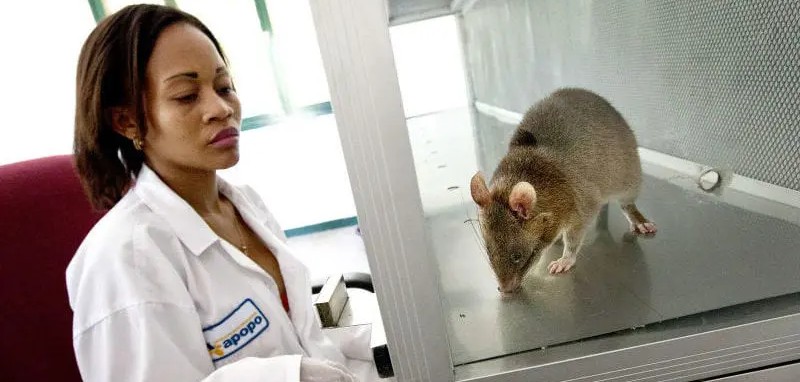
For more than two decades, the Belgian non-profit group, APOPO, has worked in Morogoro to train the rodents for vital missions. Rat trainer, Sophia Madinda, explains that they are trained using classical conditioning and positive reinforcement. Madinda says she had to overcome her fear of rodents to work on the project. When she came first, she was afraid of rats, but later got used to them and worked with them.
Tanzania has one of the highest global TB burdens, but false negatives remain a persistent major problem. In 2007, APOPO expanded its rat training to include TB detection, and now works with hospitals in Tanzania, Ethiopia, and Mozambique.
Even though the rats are not recognised as an official diagnostic tool, APOPO’s CEO, Christophe Cox, says they have detected more than 30,000 cases. With their sensitive noses, the rats sniff out samples of sputum from patients, looking for positive TB cases that had been marked as negative. Research suggests the rats are picking up on six unique volatile organic compounds in positive TB samples.
Read Also:
https://trendsnafrica.com/tanzania-a-trailblazing-initiative-to-africas-metaverse-revolution/
Any positive samples detected must be confirmed by human microscopy in APOPO’s labs before treatment can be administered. Now, these super rodents are being trained for a new life-saving mission. They will be helping search and rescue teams find survivors after disasters, such as an earthquake.