


(4 Minutes Read)
TICAD 9 marks a strategic pivot in Japan’s engagement with Africa, from aid-based to private-sector-led collaboration, focusing on critical minerals, clean energy, and youth empowerment. A key outcome is the foundation for a Japan–India–Africa trilateral partnership, leveraging Japan’s technology, India’s market access and connectivity, and Africa’s resource wealth to build sustainable, inclusive supply chains. This evolving alliance aims to counterbalance global power rivalries in Africa by promoting a rule-based, mutually beneficial model of cooperation.
The fundamental shift in US foreign trade policy has shaken the very foundations of global business partnerships. It has exposed the hazard of being at the mercy of a global power. However, this disruption has sparked a quest across the globe for new business equations and strategic and diversified partnerships. The recently concluded Tokyo International Conference on African Development (TICAD 9), held in Yokohama in August 2025, is a testimony to this.
TICAD 9 signalled a departure from Japan’s aid-based engagement with Africa. The theme of the conference, ‘Co-create innovative solutions with Africa,” amply describes the new focus –transition from Official Development Assistance (ODA) to private sector-led growth through strategic investments in critical minerals, clean energy, and youth empowerment-sectors vital to Africa’s sustainable development.
As a rich reservoir of critical minerals, Africa holds the key to global decarbonisation. At TICAD 9, Japan signed new agreements for mineral exploration and production with countries like Angola, Namibia, and the Democratic Republic of Congo. The agreement to develop the Nacala Corridor, a major trade route connecting Mozambique, Malawi, and Zambia, is hailed as a milestone in Japan-Africa ties. Joint projects for green hydrogen and ammonia, youth-focused initiatives, and women’s empowerment also got due priority in TICAD 9. Youth innovation in sectors like digital health, agriculture, and fintech will be promoted through new programs that connect African and Japanese startups.
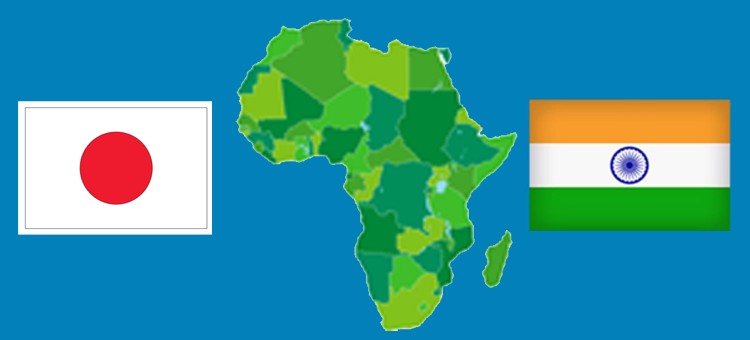
What is significant in TICAD 9 is that, apart from giving a new dimension to Japan-Africa bilateral ties, it opens a gateway for trilateral cooperation between Japan, India, and Africa. Prime Minister Shigeru Ishiba’s unveiling of the “Economic Region Initiative” at TICA9 is expected to transform the Indian Ocean as a highway of commerce linking India, Japan, and Africa, boosting trade and investment across the region. The goal is to draw Africa into the critical mineral supply chains and include semiconductors, electronics, etc. The idea is to leverage Japan’s processing technology, India’s growing manufacturing capacity, and Africa’s resource strength.
The groundwork for this trilateral cooperation had already taken place in February 2025, at the Japan–India–Africa Business Forum in Tokyo, when the “Japan–India Cooperation Initiative for Sustainable Economic Development in Africa” was launched. India’s role was envisaged as a strategic bridge to connect to Africa. The objective was to tap India’s deep market understanding and geographic proximity to build synergies between Japanese and Indian companies in areas including infrastructure projects, industrial capacity-building, etc.
Japan and India already share strategic frameworks. The Asia–Africa Growth Corridor (AAGC) was established in 2017 by the Indian and Japanese governments, aimed at building infrastructure and connectivity spanning the Indian Ocean and Africa. However, the initiative was stalled due to a shift in political and economic priorities on both sides. As India and Japan are seeking to expand their partnerships, there is an urgent need to revive the proposal.
The decision of the Japan International Cooperation Agency (JICA) to select India’s Avishkaar Group, along with two international funds, for advancing the Sustainable Development Goals (SDGs) in Africa opened a new chapter in Indo-Japanese economic partnership. As per the agreement, JICA will invest $40 million in Aavishkaar Capital’s Global Supply Chain Support Fund to provide growth capital and expand its impact investing reach across Asia and Africa. Through this initiative, Japan is pioneering new models of Official Development Assistance (ODA), shifting from traditional co-financing of World Bank projects to backing innovative, private sector-led solutions that offer scalable, sustainable impact.
Japan has committed approximately $5.5 billion in loans to support sustainable growth in Africa. Other commitments include training 300000 people in AI, supporting healthcare, providing vaccines, promoting start-ups, boosting regional integration, and supporting co-creation efforts. Given India’s strong base and market access in Africa in healthcare, pharmaceuticals, digital infrastructure, tech education, etc, India can provide critical support to Japan to deliver its commitments. The Pan‑African e‑Network project (tele-education and tele‑medicine infrastructure) is a shining example of India–Africa digital linkage.
In each of the identified sectors, Japan and India can play complementary roles to expand their footprints in Africa. While Japan can bring advanced technology, funding, and R&D capabilities, India can bring to the table its deep cultural and economic ties with Africa and regional knowledge. Together, they can deliver large-scale projects in Africa.
The just-concluded visit of the Indian PM to Japan chalked out the Special Strategic and Global Partnership between India and Japan. It highlights the synergy between the two countries, not only to build on bilateral ties, but to go beyond and reach out together across the globe. At a time when global powers like China, Russia, and the US are vying for a share of African business, such a trilateral approach will offer an inclusive and rule-based, mutually beneficial collaborative model.